Discover how to bleed a commercial radiator to boost heating efficiency. Flair Facilities shares signs, steps, and expert tips for lasting performance.
Air trapped inside radiators is one of the most common reasons commercial heating systems lose efficiency. It prevents hot water from circulating fully, which lowers heat output and makes the system work harder. Even a small amount of trapped air can upset the balance across an entire network of radiators.
In offices, schools, hotels, and industrial facilities, this can cause uneven temperatures, higher fuel consumption, and faster wear on pumps and boilers. Flair Facilities engineers handle radiator maintenance daily, using tested methods to keep large-scale heating systems performing at their best.
What Does ‘Bleeding a Radiator’ Mean in a Commercial Heating System?
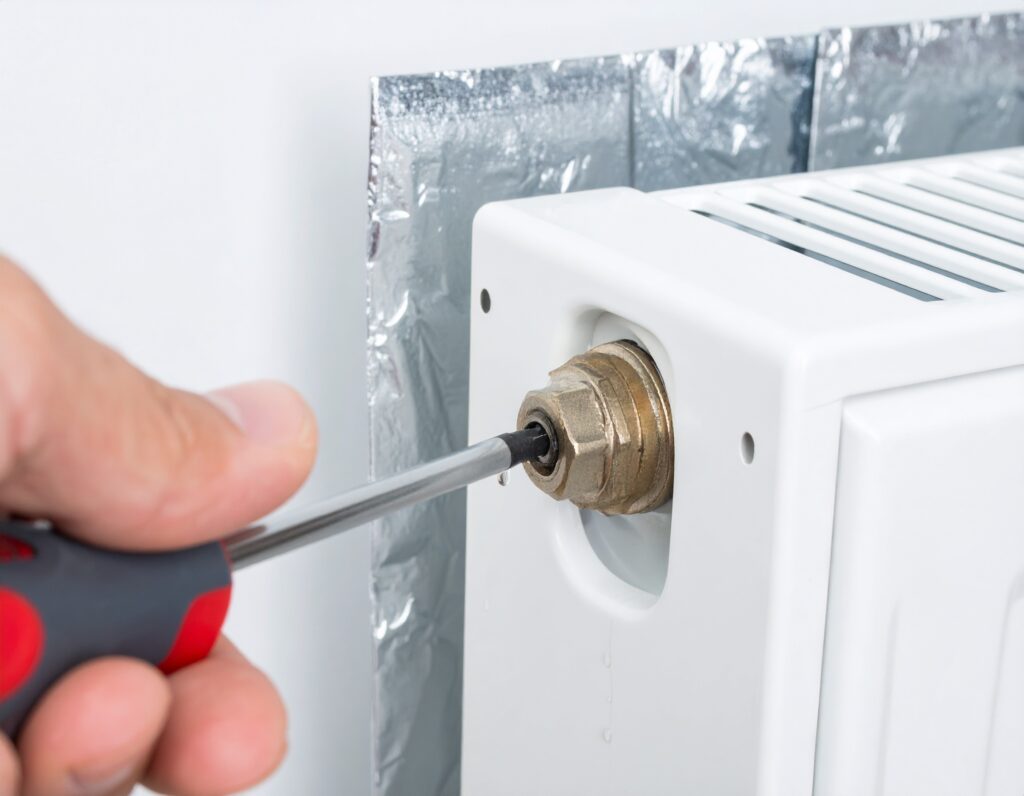
Bleeding a radiator is the process of releasing trapped air so water can flow freely inside the panel. In commercial heating systems, this is more than a quick maintenance task.
Air enters the system during water top-ups, through micro-leaks, or when gases separate from heated water. As the air rises to the top of radiators, it creates an insulating layer that blocks heat from transferring effectively.
Domestic radiator bleeding involves one or two units and a small sealed system. Commercial sites may have dozens or even hundreds of radiators, all connected to a central plant room with a pressurised circuit. This scale makes sequence, pressure control, and balancing far more important.
How Can You Tell if a Commercial Radiator Needs Bleeding?
There are several clear signs:
- The top of the radiator is cold while the bottom is warm.
- Gurgling or bubbling sounds when the heating is running.
- Rooms heating unevenly compared with other areas.
In commercial buildings, these symptoms can spread across multiple floors if the trapped air moves through the pipework. This increases system workload and can make certain spaces uncomfortable for staff or visitors. Early attention reduces the risk of wider imbalance.
Why Is Bleeding Radiators Important for Commercial Heating Efficiency?
Trapped air forces the boiler to heat water for longer cycles to meet the thermostat’s demand. This increases fuel usage, speeds up component wear, and shortens the service life of pumps and valves.
Bleeding radiators restores full water circulation, improves heat distribution, and allows the plant room to operate closer to its intended efficiency level. For commercial operators, it also helps maintain compliance with maintenance standards required for insurance and regulatory checks.
Can You Bleed a Commercial Radiator Without a Heating Engineer?
It depends on the system. In small offices or shops with a simple heating setup, trained maintenance staff can sometimes carry out bleeding.
However, in larger or more complex systems, the risk of incorrect bleeding is higher. Mismanaging the process can cause sudden pressure drops, airlocks in other areas, or water leaks. In multi-storey buildings, bleeding without proper sequence can create temperature imbalances between floors. That’s why most facilities rely on Gas Safe engineers from companies like Flair Facilities to handle it as part of planned maintenance.
Step-by-Step Guide: How to Bleed a Radiator
Professional radiator bleeding in commercial sites follows a controlled process:
- Shut down the heating system and allow it to cool for safe access.
- Locate the radiator bleed valve and use the correct key to open it slowly.
- Release air until water flows steadily.
- Close the valve firmly and check the pressure gauge in the plant room.
- Top up the system water if needed and confirm pressure is within manufacturer’s specifications.
- Repeat for each radiator in a planned order to maintain balance.
In large facilities, engineers often work from the top floor downwards to move air towards accessible outlets. This reduces the risk of air pockets forming in upper levels.
What Happens After Bleeding a Radiator in a Commercial System?
After bleeding, the system pressure is checked and adjusted. Engineers then monitor radiators across different zones to confirm even heating.
In commercial systems with advanced controls, engineers may use thermal imaging or flow meters to confirm full circulation. Where heating is zoned, they adjust valves to balance water flow between areas, ensuring consistent performance throughout the building.
How Often Should Commercial Radiators Be Bled?
Radiators in commercial buildings are often bled once or twice a year, usually during pre-winter servicing and after any major work on the system.
Factors that may require more frequent bleeding include:
- Older systems with higher air ingress rates.
- Systems that have been drained and refilled.
- Pipework layouts prone to trapping air in upper sections.
Including radiator bleeding in a planned preventive maintenance schedule avoids sudden drops in heating performance during peak demand months.
When Bleeding a Radiator Is Not Enough: Signs of Bigger Problems
If a radiator develops cold spots again soon after bleeding, the cause may be sludge, corrosion, or a failing pump. Airlocks can also be a symptom of leaks or poor water treatment.
Flair Facilities engineers can test water quality, inspect pumps, and check for debris in the system. Where needed, they can carry out power flushing, replace faulty valves, or adjust controls to eliminate recurring issues.
Choosing the Right Commercial Heating Partner for Radiator Maintenance
A qualified heating partner should have the experience to handle commercial-scale systems without causing downtime. They should provide full system checks, not just quick fixes.
Flair Facilities delivers commercial heating services across London, combining routine maintenance with rapid response support. Our Gas Safe engineers manage plant rooms, boilers, and radiators with precision so your heating runs at peak efficiency year-round.
Explore our Services here:
- Commercial Gas Boiler Services
- BMS Services
- Commercial Boiler Pump Services
- Gas Purging Services
- Commercial Kitchen and Gas Catering Engineers
- Water Booster Pump Services
- Pressure Testing Services
- Gas Safety Certificate CP42
Bleeding radiators in commercial buildings is more than a quick maintenance job. Done correctly, it restores heating efficiency, reduces energy costs, and extends the life of key components. In large systems, it requires the right sequence, pressure management, and professional oversight to avoid costly mistakes.
Flair Facilities offers expert radiator maintenance as part of a complete commercial heating service, ensuring your building stays warm, efficient, and compliant year-round.
Frequently Asked Questions
For a single radiator, it may take under five minutes. Large-scale checks can take an hour or more, depending on the building size.
Usually yes. Once air is removed, heat spreads evenly, and you’ll notice improvement during the next heating cycle.
It can over time. Air reduces circulation efficiency, which increases strain on the boiler and connected components.
Not always, but winter is when air problems are most noticeable because heating demand is higher.
Yes, if the noises are caused by trapped air. If the sounds persist, the cause may be sludge or loose pipework.
If cold spots remain after bleeding, sludge may be the problem. Power flushing removes this buildup.