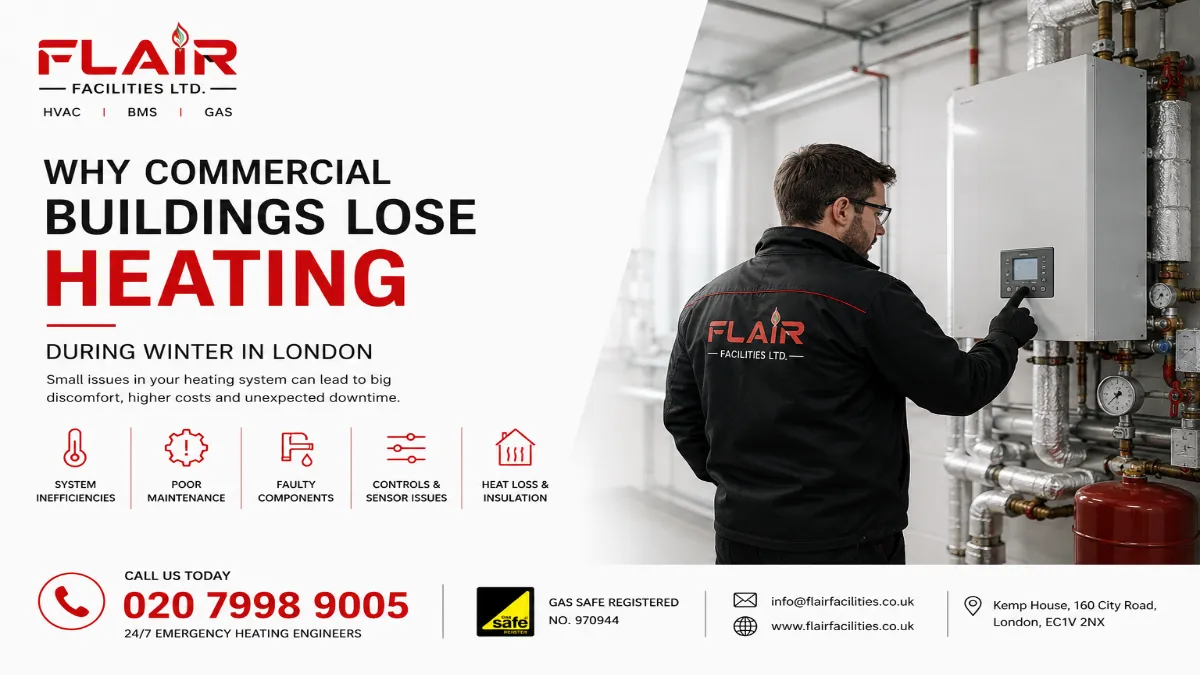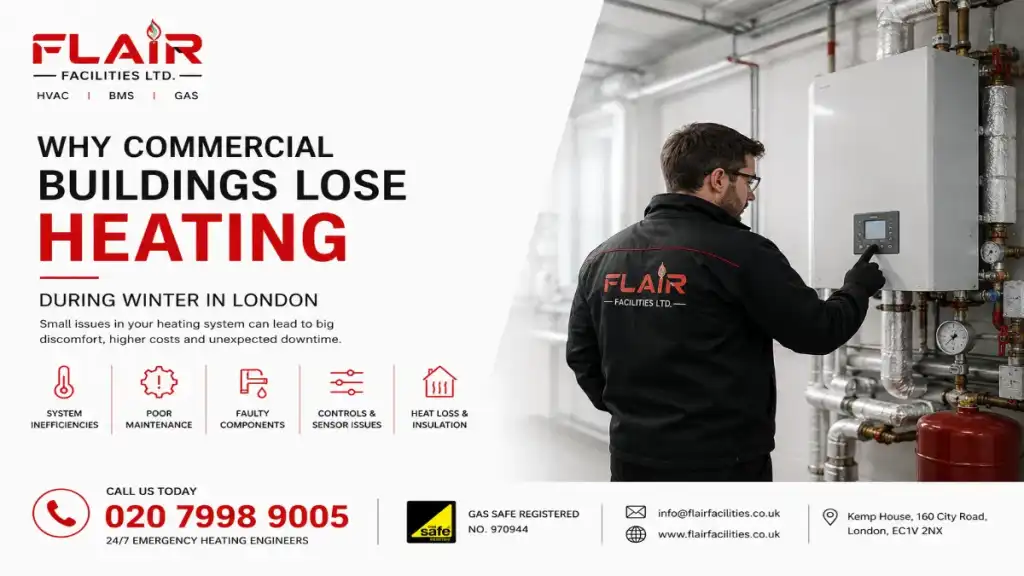
Commercial buildings often lose heating during winter because of boiler failures, poor maintenance, faulty controls, circulation problems, frozen pipework, or ageing equipment. Regular servicing and Planned Preventative Maintenance (PPM) help businesses reduce breakdowns, improve energy efficiency, and maintain reliable heating throughout the colder months.
Summary
Commercial buildings often lose heating during winter because of boiler failures, poor maintenance, faulty controls, circulation problems, frozen pipework, or ageing equipment. Regular servicing and Planned Preventative Maintenance (PPM) help businesses reduce breakdowns, improve energy efficiency, and maintain reliable heating throughout the colder months.
When the Temperature Drops, Heating Failures Become More Common
Every winter, businesses across London experience unexpected heating failures that disrupt daily operations, affect employee comfort, and can even force temporary closures.
For offices, hotels, schools, healthcare facilities, warehouses, manufacturing plants, and retail premises, a heating failure is more than an inconvenience. It can impact productivity, damage temperature-sensitive equipment or stock, increase energy costs, and create health and safety concerns.
Fortunately, many commercial heating breakdowns are preventable.
Understanding why commercial buildings lose heating during winter can help facilities managers and property owners take proactive steps before a minor fault becomes a costly emergency.
Why Do Commercial Buildings Lose Heating During Winter?
Commercial heating systems work much harder during colder weather. Boilers, pumps, valves, controls, and HVAC equipment operate for longer periods and under greater demand, increasing the likelihood of component failure if systems have not been properly maintained.
Below are the most common causes.
1. Poor Boiler Maintenance
One of the leading causes of winter heating failures is inadequate boiler maintenance.
Commercial boilers accumulate debris, scale, and wear over time. Without regular servicing, efficiency decreases while the risk of breakdown increases.
Routine servicing helps identify:
- Worn components
- Heat exchanger issues
- Burner faults
- Pressure problems
- Gas safety concerns
- Control failures
Annual servicing significantly reduces unexpected boiler failures during peak heating season.
2. Heating Systems Operating Beyond Their Capacity
Many commercial buildings increase heating demand during winter.
Older boilers may struggle to maintain output, particularly if:
- Additional office space has been added
- Occupancy has increased
- Heating zones have expanded
- Existing systems were undersized
A professional heating assessment can determine whether upgrades are required.
3. Faulty Heating Controls
Modern commercial heating relies on sophisticated controls including:
- Programmable controllers
- Thermostats
- Building Management Systems (BMS)
- Sensors
- Time schedules
Incorrect programming or equipment failure can prevent boilers from operating correctly even when the boiler itself is functioning normally.
4. Circulation Pump Failures
Heating systems rely on circulation pumps to move hot water around the building.
Pump problems may include:
- Motor failure
- Airlocks
- Seized bearings
- Electrical faults
- Worn impellers
Without adequate circulation, some areas of a building may remain cold while others overheat.
5. Frozen Pipework
Although less common in commercial buildings than domestic properties, exposed pipework can freeze during prolonged cold weather.
Frozen condensate pipes and external pipework may:
- Restrict water flow
- Trigger boiler lockouts
- Cause leaks
- Damage equipment
Proper insulation and regular inspections help minimise these risks.
6. Ageing Commercial Heating Equipment
Commercial boilers typically have a long operational life, but ageing equipment becomes less reliable over time.
Older systems often experience:
- Reduced efficiency
- Increased repair costs
- Difficulty sourcing replacement parts
- More frequent breakdowns
Replacing outdated equipment before failure can reduce long-term operating costs.
7. Lack of Planned Preventative Maintenance (PPM)
Businesses that rely solely on reactive repairs are more likely to experience winter breakdowns.
A Planned Preventative Maintenance (PPM) programme helps identify developing faults before they affect business operations.
Typical PPM visits include:
- Boiler servicing
- Pump inspections
- Valve testing
- Gas safety checks
- Heating control testing
- Plant room inspections
Warning Signs Your Commercial Heating System Needs Attention
Don’t ignore early warning signs such as:
- Uneven heating
- Rising energy bills
- Strange boiler noises
- Low pressure
- Frequent system resets
- Water leaks
- Slow warm-up times
- Inconsistent temperatures
- Fault codes
- Complaints from building occupants
Addressing these issues early is often less expensive than emergency repairs.
Which Buildings Are Most at Risk?
Commercial heating failures can affect any business, but they are particularly disruptive for:
- Office buildings
- Hotels
- Schools
- Universities
- Hospitals
- Care homes
- Warehouses
- Manufacturing facilities
- Retail premises
- Leisure centres
- Government buildings
- Multi-site commercial properties
How to Prevent Winter Heating Breakdowns
Businesses can reduce the likelihood of winter failures by:
- Scheduling annual commercial boiler servicing
- Implementing Planned Preventative Maintenance (PPM)
- Inspecting pumps and valves
- Testing heating controls
- Monitoring energy performance
- Upgrading ageing equipment
- Maintaining plant rooms
- Responding quickly to minor faults
- Keeping service records up to date
- Working with experienced commercial heating engineers
Preventative maintenance is almost always more cost-effective than emergency repairs.
Why Professional Commercial Heating Engineers Matter
Commercial heating systems are more complex than domestic installations and require specialist knowledge.
Experienced commercial heating engineers can:
- Diagnose faults quickly
- Improve heating efficiency
- Maintain Gas Safe compliance
- Service commercial boilers
- Optimise HVAC systems
- Maintain plant rooms
- Integrate Building Management Systems (BMS)
- Recommend energy-saving improvements
Working with a specialist contractor reduces operational risk while helping businesses maintain comfortable, efficient buildings.
Why Choose Flair Facilities Ltd.?
Choosing the right commercial heating contractor means working with a team that understands the operational demands of commercial buildings. Flair Facilities Ltd. delivers specialist mechanical and commercial heating solutions for businesses throughout Greater London, helping property owners, facilities managers, and estates teams keep their buildings safe, compliant, and operating efficiently.
Our experienced engineers provide a complete range of services, from planned maintenance and emergency breakdown support to commercial boiler installations, HVAC maintenance, plant room engineering, commercial gas services, and building compliance. By taking a proactive approach to system performance, we help reduce downtime, improve energy efficiency, and extend the lifespan of critical mechanical assets.
Whether you’re managing an office, hotel, healthcare facility, warehouse, manufacturing site, school, or retail premises, our team delivers practical engineering solutions tailored to your operational requirements.
For more information, explore our related commercial engineering services below.
| Related Commercial Service | Description |
|---|---|
| Commercial LPG Gas Services London | Complete commercial LPG solutions, including installation, pipework, maintenance, inspections, repairs, and compliance for commercial and industrial premises. |
| Commercial Boiler Repairs London | Prompt fault diagnosis and repair services to restore commercial heating systems quickly and minimise disruption to your business. |
| Commercial Boiler Servicing London | Scheduled servicing to improve boiler performance, maximise efficiency, reduce breakdown risks, and support manufacturer recommendations. |
| Commercial Planned Preventative Maintenance (PPM) | Tailored maintenance programmes that help prevent unexpected failures, extend equipment life, and improve overall system reliability. |
| Commercial HVAC Maintenance | Planned maintenance for commercial heating, ventilation, and air conditioning systems to ensure efficient and reliable building performance. |
| Commercial Plant Room Maintenance | Inspection, servicing, and optimisation of boilers, pumps, valves, pressurisation units, controls, and associated plant room equipment. |
| Commercial Gas Engineering | Gas Safe commercial gas installation, commissioning, servicing, testing, repairs, and ongoing maintenance for commercial properties. |
| Commercial Boiler Pump Repairs | Specialist repair and replacement of circulation pumps, boiler pumps, and related heating components to maintain consistent system performance. |
| Commercial BMS Services | Building Management System (BMS) installation, upgrades, optimisation, fault diagnosis, and maintenance to improve building efficiency and energy control. |
| Commercial Water Compliance Services | Water hygiene management, compliance inspections, monitoring, testing, and remedial services to help businesses meet UK regulations. |
| Commercial RPZ Valve Installation & Annual Certification | RPZ valve installation, annual testing, certification, maintenance, and compliance services to protect commercial water supplies. |
Key Takeaways
- Most commercial heating failures are preventable.
- Boiler servicing significantly reduces winter breakdowns.
- Planned Preventative Maintenance helps identify faults before failure.
- Heating controls, pumps, and plant room equipment require regular inspection.
- Working with experienced commercial heating engineers improves reliability, efficiency, and compliance.
20 Frequently Asked Questions
1. Why do commercial buildings lose heating during winter?
Commercial buildings commonly lose heating because of boiler failures, circulation pump issues, faulty controls, frozen pipework, low system pressure, or a lack of regular maintenance. Increased winter demand can also place additional strain on ageing heating systems.
2. What is the most common cause of commercial boiler breakdowns?
Poor maintenance is one of the leading causes. Dirt build-up, worn components, faulty burners, and neglected servicing can all increase the likelihood of boiler failures during winter.
3. How can businesses prevent commercial heating failures?
Regular commercial boiler servicing, Planned Preventative Maintenance (PPM), inspections of pumps and controls, and early repairs can significantly reduce the risk of unexpected heating breakdowns.
4. How often should a commercial heating system be serviced?
Most commercial heating systems should be serviced at least once a year. Buildings with heavy heating demand may benefit from more frequent maintenance visits.
5. Can cold weather affect commercial boiler performance?
Yes. Low temperatures increase heating demand, and freezing conditions can affect condensate pipes, external pipework, valves, and other heating components if they are not properly protected.
6. What are the warning signs of a failing commercial heating system?
Common signs include uneven heating, unusual noises, rising energy bills, boiler lockouts, low pressure, water leaks, inconsistent temperatures, and slow system warm-up times.
7. Why is my commercial boiler running but the building is still cold?
The issue may be caused by faulty circulation pumps, airlocks, blocked pipework, malfunctioning heating controls, or balancing issues within the heating system.
8. What is Planned Preventative Maintenance (PPM)?
PPM is a scheduled maintenance programme that includes inspections, servicing, testing, and adjustments designed to prevent unexpected equipment failures and improve long-term system reliability.
9. Can commercial heating engineers improve energy efficiency?
Yes. Commercial heating engineers can optimise heating controls, improve boiler efficiency, balance heating systems, recommend equipment upgrades, and identify energy-saving opportunities.
10. Which commercial buildings are most affected by winter heating problems?
Offices, hotels, schools, hospitals, warehouses, manufacturing facilities, retail premises, care homes, and public buildings are particularly vulnerable because they rely heavily on consistent indoor temperatures.
11. How long does it take to repair a commercial boiler?
Repair times depend on the fault, equipment availability, and system complexity. Minor issues may be resolved within a few hours, while major component replacements can take longer.
12. Is it better to repair or replace an ageing commercial boiler?
If repairs become frequent, efficiency declines, or replacement parts are difficult to source, investing in a modern commercial boiler may provide better long-term value and lower operating costs.
13. Can Building Management Systems (BMS) help prevent heating failures?
Yes. A Building Management System (BMS) monitors and controls heating equipment, helping detect faults early, improve efficiency, and optimise building performance.
14. Why are circulation pumps important in commercial heating systems?
Circulation pumps move heated water throughout the building. If a pump fails, some areas may receive little or no heat, even if the boiler is operating correctly.
15. What industries benefit from commercial heating maintenance?
Commercial heating maintenance benefits offices, hotels, schools, healthcare facilities, warehouses, manufacturing plants, leisure centres, retail premises, and multi-site commercial properties.
16. Should commercial heating systems be inspected before winter?
Yes. Scheduling inspections before colder weather allows engineers to identify worn components, optimise performance, and reduce the likelihood of emergency breakdowns during peak demand.
17. How do commercial heating engineers diagnose heating faults?
Engineers use specialist testing equipment to assess boilers, pumps, valves, heating controls, pipework, Building Management Systems (BMS), and gas appliances before identifying the root cause of the problem.
18. Why is internal heating zoning important in commercial buildings?
Heating zones allow different areas of a building to be controlled independently, improving comfort, reducing energy consumption, and preventing unnecessary heating of unused spaces.
19. Why should businesses choose a specialist commercial heating contractor?
Commercial heating contractors understand large-scale heating systems, commercial compliance requirements, plant rooms, HVAC systems, and Gas Safe regulations, ensuring work is completed safely and efficiently.
20. Why choose Flair Facilities Ltd. for commercial heating services in London?
Flair Facilities Ltd. provides commercial heating, boiler servicing, HVAC maintenance, plant room engineering, commercial gas services, and Planned Preventative Maintenance (PPM) for businesses across Greater London. Our experienced engineers help organisations improve reliability, energy efficiency, and compliance while reducing costly heating downtime.
Explore Our Related Commercial Engineering Services
At Flair Facilities Ltd., we provide end-to-end commercial heating and mechanical engineering solutions to help businesses maintain safe, efficient, and compliant buildings across Greater London. Our expertise covers everything from commercial boiler installation and commercial boiler repair and maintenance to tailored planned preventative maintenance (PPM) programmes and commercial plant maintenance and compliance services that help minimise downtime and maximise system performance.
Our specialist commercial HVAC contractors also support businesses with commercial heat pump systems, air handling units (AHUs), Building Management Systems (BMS), and commercial pump services to improve energy efficiency, building performance, and operational reliability.
We also deliver specialist commercial heating solutions tailored to a wide range of industries, including hotels, hospitals, universities, care homes, warehouses, and manufacturing facilities, helping organisations maintain dependable heating systems that support day-to-day operations.
Trusted Industry Resources
To learn more about commercial gas safety, building services engineering, energy efficiency, and regulatory compliance, we recommend the following trusted organisations and industry resources:
- Gas Safe Register – Verify Gas Safe registered engineers and businesses working on commercial gas installations.
- Health and Safety Executive (HSE) – Official guidance on workplace health, safety, and legal compliance.
- CIBSE – Professional guidance on building services engineering, HVAC systems, and sustainable building performance.
- BESA – Best practice resources for the building engineering services industry.
- Energy Saving Trust – Independent advice on improving energy efficiency and reducing operating costs.
- Carbon Trust – Information on carbon reduction, energy management, and sustainability for commercial organisations.
- Sport England – Guidance on building performance and facility management for sports and leisure environments.
Prepare Your Commercial Heating System Before Winter
Don’t wait until your heating system fails during the coldest months of the year.
Whether you manage an office, hotel, warehouse, healthcare facility, school, or industrial building, proactive maintenance can help keep your business operating safely and efficiently.
Contact Flair Facilities Ltd. today to arrange a commercial heating inspection, boiler servicing, or Planned Preventative Maintenance programme before winter demand increases.
📞 020 7998 9005