Flair Facilities simplifies HVAC plant room maintenance with expert service, clear planning, and fast support that keeps systems safe, efficient, and compliant.
HVAC plant rooms are the hidden workhorses of commercial buildings. They manage heating, cooling, ventilation, and energy distribution behind the scenes. When systems break down, comfort disappears and operating costs soar. That’s why routine maintenance is essential.
Flair Facilities specialises in making plant room maintenance straightforward and effective. With experienced engineers, transparent reporting, and flexible scheduling, we help keep your building’s core systems efficient, safe, and fully compliant. This article breaks down what’s involved, why it matters, and how we make the entire process easier for you.
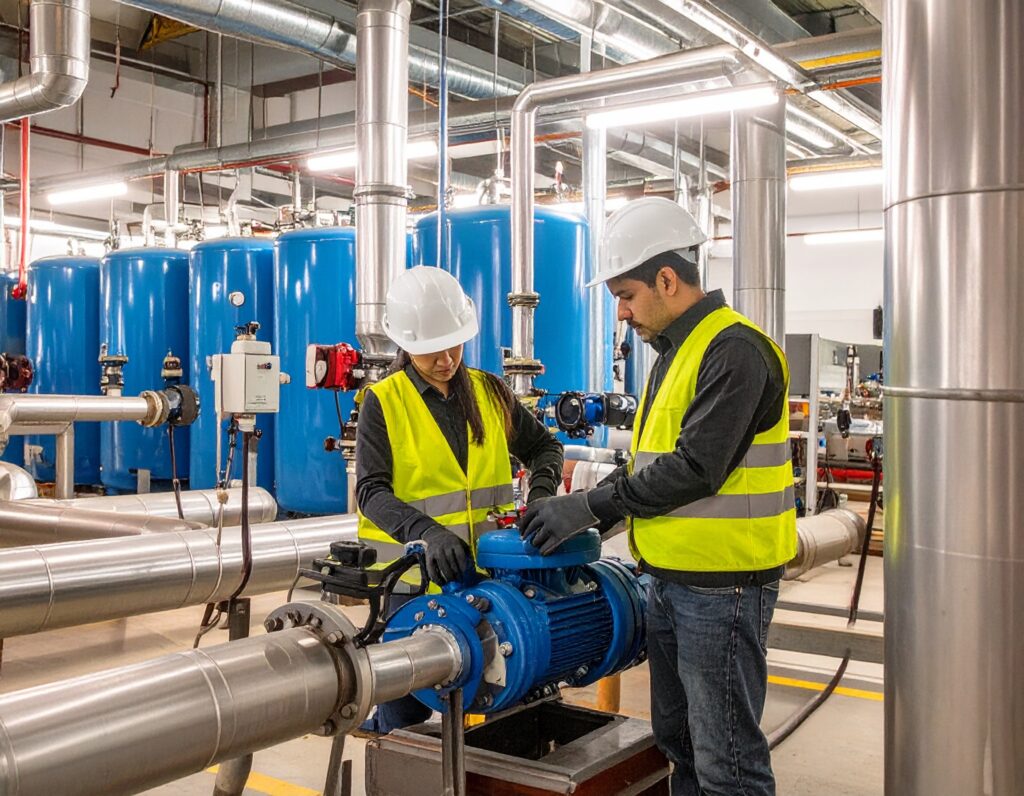
Why HVAC Plant Room Maintenance Matters
A well-maintained HVAC plant room prevents system breakdowns, energy waste, and non-compliance with safety regulations. It supports consistent air quality, stable indoor temperatures, and reliable heating and cooling for commercial buildings.
Neglected systems develop hidden faults that drive up energy bills and shorten equipment life. Clogged filters, corroded pumps, and misaligned controls reduce performance and pose serious safety risks. Regular maintenance improves system efficiency, prevents downtime, and helps avoid costly emergency callouts.
What Equipment Needs Regular Servicing in a Plant Room?
Every component inside the HVAC plant room plays a role in system performance. If one part underperforms, it strains everything else. That’s why a planned maintenance schedule should cover each of the following:
Boilers and Burners
Combustion must be safe, clean, and controlled. Boiler flues, heat exchangers, ignition systems, and gas valves all need inspection and adjustment. Soot buildup or faulty sensors can lead to dangerous emissions or shutdowns.
Chillers and Condensers
Cooling performance depends on refrigerant levels, clean coils, and functioning expansion valves. Any drop in pressure or buildup of debris reduces output and increases energy demand.
Pumps and Circulators
Flow rate matters. If a pump slows down or starts leaking, heating and cooling zones go out of balance. Bearings, seals, and impellers must be checked to prevent sudden failure.
Pressurisation Units and Expansion Vessels
Maintaining system pressure protects components from stress. If these units aren’t set correctly, it can lead to cavitation, leaks, or airlocks.
Controls and Sensors
Controllers must react to load changes, occupancy, and external temperatures. Faulty thermostats or disconnected sensors make systems unresponsive. That wastes energy and frustrates occupants.
Routine checks prevent small issues from turning into major breakdowns. Precision in diagnostics saves time and cuts future repair costs.
How Often Should HVAC Plant Room Systems Be Serviced?
Service frequency depends on your building’s workload and operational intensity. For most commercial sites, inspections every quarter are recommended. High-demand environments like hospitals, factories, and large offices may need monthly checks. A full annual service is essential to stay compliant and maintain performance.
Flair Facilities provides service packages that match SFG20 and CIBSE standards. We adjust every visit to match your site conditions. Our Gas Safe engineers focus on prevention, not just ticking boxes, so your plant room works efficiently and stays reliable.
What Happens During a Professional Plant Room Maintenance Visit?
Each visit from Flair Facilities includes detailed inspections and system optimisation. Engineers check gas pressures, test burner performance, calibrate sensors, and verify airflow. Electrical controls, drainage lines, pumps, and safety devices are also reviewed. Every step is logged with reports and images for transparency.
Alongside checks, we clean filters, flush water systems, and apply treatments that slow corrosion and prevent scale. Our process is designed to improve system health, reduce strain, and boost long-term energy savings.
What Are the Hidden Risks of Skipping HVAC Plant Room Maintenance?
Skipping maintenance puts your building at risk. Over time, small faults lead to high energy bills, sudden breakdowns, or equipment failure. Pressure drops, blocked drains, or sensor errors often go unnoticed until major issues occur.
With Flair Facilities, these risks are avoided. Our approach is proactive, not reactive. Regular checks reduce emergency repairs, improve safety, and support compliance. A well-maintained plant room protects your budget, your building, and your peace of mind.
What Are the Most Common HVAC Plant Room Failures?
Understanding what can go wrong helps you stay ahead of major disruptions. Some of the most common issues include:
- Failing circulation pumps
- Faulty control panels
- Blocked filters and valves
- Sensor calibration drift
- Pressure imbalances
These problems don’t usually announce themselves loudly. Instead, they creep up slowly and reduce efficiency without triggering alarms. If left unresolved, they often cause full system lockouts or damage to core components. Flair Facilities identifies these red flags early and corrects them before they cost you more.
How Do You Know Your HVAC Plant Room Needs Immediate Attention?
The signs can be subtle or severe. You might notice uneven heating across zones, unexpected noise from pumps or fans, or higher-than-normal energy consumption. Sudden humidity changes or erratic temperature readings are also common indicators.
At Flair Facilities, we recommend logging these symptoms as they appear. Our engineers review the data and trace the fault back to its source. This targeted method saves time, avoids guesswork, and speeds up the fix.
What’s the Long-Term Value of Scheduled Maintenance?
Scheduled HVAC maintenance is a financial decision. Buildings that skip servicing often face unpredictable failures, energy waste, and faster equipment degradation. Those with regular maintenance, on the other hand, see steady performance, fewer emergency repairs, and longer plant life.
At Flair Facilities, we track client savings through routine optimisation. Most sites achieve a 15–25% reduction in energy costs within 12 months. That happens because clean, calibrated systems consume less power and recover output more efficiently. Our engineers maintain critical tolerances, fine-tune component settings, and catch wear before it turns into downtime.
Here’s how scheduled maintenance compares with reactive repair:
Comparison of Maintenance Strategies
Factor | Reactive Repairs | Scheduled Maintenance (Flair Facilities) |
Downtime Frequency | High | Low |
Annual Energy Costs | Unpredictable and inflated | 15–25% lower |
Equipment Lifespan | 8–10 years (shortened by stress) | 12–15 years (well-preserved) |
Emergency Callouts | Frequent | Rare |
System Efficiency | Drops over time | Maintained above 90% |
Compliance Risk | High | Minimal |
Our plant room service plans are built for asset preservation, not just compliance. By proactively managing wear, updating controls, and analysing performance trends, Flair Facilities keeps HVAC systems stable and profitable across the long haul.
What Maintenance Mistakes Lead to Costly Breakdowns?
HVAC plant rooms fail when small issues are ignored. Many facilities wait until something breaks before calling for help. By that point, the damage often extends beyond the original fault.
Missing routine filter changes, overlooking vibrations in motors, or dismissing error codes leads to wear and tear. Leaks stay hidden. Pressure problems grow unnoticed. Without accurate maintenance records, diagnosing faults takes longer and becomes more expensive.
In critical environments like hospitals, data centres, and schools, a single breakdown can interrupt essential services. It can also result in non-compliance with safety standards. These are not risks worth taking.
How Flair Facilities Prevents HVAC Downtime
Flair Facilities uses a proactive, data-led maintenance strategy. We do not just fix faults. We study the full system performance over time. This includes tracking temperature trends, pump wear, and electrical fluctuations.
Each client receives a bespoke schedule based on equipment condition, workload, and service history. Our engineers perform advanced diagnostics on every visit. We use thermal imaging, flow readings, and digital pressure checks to catch failures early.
Reports are sent after every inspection. These highlight future risks, allowing facility managers to act before breakdowns happen. This approach cuts emergency callouts, lowers operating costs, and extends the life of your HVAC system.
Why Choose Flair for Your Plant Room Needs?
Flair Facilities brings more than tools and checklists. We bring real expertise in commercial HVAC systems. Our teams manage systems with complex controls, zoning, and automation that many providers avoid.
We collaborate with in-house engineers and compliance teams to keep everything aligned. This includes documentation, maintenance logs, and energy reporting. If there are changes in safety regulations or opportunities for government rebates, we keep you informed.
Most importantly, Flair Facilities builds trust. We provide fast responses, clear communication, and reliable engineers who understand what is at stake in large-scale buildings. Your plant room runs better when you have the right people behind it.
Explore our Services here:
- Commercial Gas Boiler Services
- BMS Services
- Commercial Boiler Pump Services
- Gas Purging Services
- Commercial Kitchen and Gas Catering Engineers
- Water Booster Pump Services
- Pressure Testing Services
- Gas Safety Certificate CP42
HVAC plant room maintenance is about safeguarding your building’s performance, energy costs, and safety record. Ignoring early signs of trouble leads to expensive breakdowns and unhappy occupants. But with consistent maintenance, you get fewer callouts, lower fuel consumption, and a system that performs exactly as it should, every day.
If you manage a commercial property and need reliable experts to maintain or repair your plant room systems, Flair Facilities is here to help. We provide prompt, thorough service that keeps your operations running smoothly. You can count on us to spot problems early and resolve them before they escalate.
Visit our service page to view our commercial gas boiler services and book your next maintenance appointment with our certified Gas Safe engineers. Contact us today!
Frequently Asked Questions
At a minimum, twice a year. Larger systems or critical environments may require quarterly checks for compliance and performance.
Unusual noises, pressure drops, inconsistent temperatures, or energy bill spikes are all warning signs that shouldn’t be ignored.
Yes. A poorly maintained plant room can increase energy usage by 15 to 30 percent due to inefficient operation and system strain.
They’re extremely useful. Real-time data helps detect failures early, monitor trends, and adjust settings for better efficiency.
Always use certified engineers with HVAC and building services experience. Flair Facilities provides fully qualified professionals for this work.
Checks include pumps, valves, pipework, controls, filters, boilers, ventilation, and system safety devices, along with condition reports.