Learn how water booster pump installation improves pressure in commercial buildings. Discover key steps, sizing tips, and maintenance essentials.
Low water pressure in commercial buildings is more than a mild nuisance. It disrupts daily operations, reduces equipment efficiency, and risks breaching compliance. Whether you’re managing an office block, hotel, or industrial facility, maintaining steady water flow is essential.
Installing a water booster pump is a proven solution. It improves pressure, balances flow across floors, and supports everything from HVAC systems to fire safety lines. This article explains how booster pumps work, what causes low pressure, and how proper installation safeguards your building’s performance.
What Is a Water Booster Pump and Why Does Your Building Need One?
A water booster pump increases the pressure and flow rate of water across plumbing systems. In commercial buildings, especially multi storey ones, water pressure often drops at higher elevations or long distances from the source.
This affects:
- Toilet and shower function
- Cooling towers and HVAC efficiency
- Sprinkler and fire suppression performance
By installing a booster pump, you stabilise pressure levels across all zones and help your system work more efficiently.
What Causes Low Water Pressure in Commercial Buildings?
Several issues may contribute to low pressure in a commercial setting:
Gravity: Water travelling upward requires more force. The higher the destination, the greater the pressure needed.
Pipe Distance: The longer the run of the pipe from the supply, the more pressure loss occurs.
Pipe Size: Narrow pipes restrict flow.
City Supply Pressure: In some locations, the municipal supply enters the premises with insufficient pressure.
Water Treatment Systems: Filtration and softeners can reduce water speed.
Aging Infrastructure: Corroded or clogged pipes block consistent water delivery.
A well sized water booster pump resolves these issues by compensating for the pressure losses across your plumbing network.
How Does a Water Booster Pump Work in Commercial Settings?
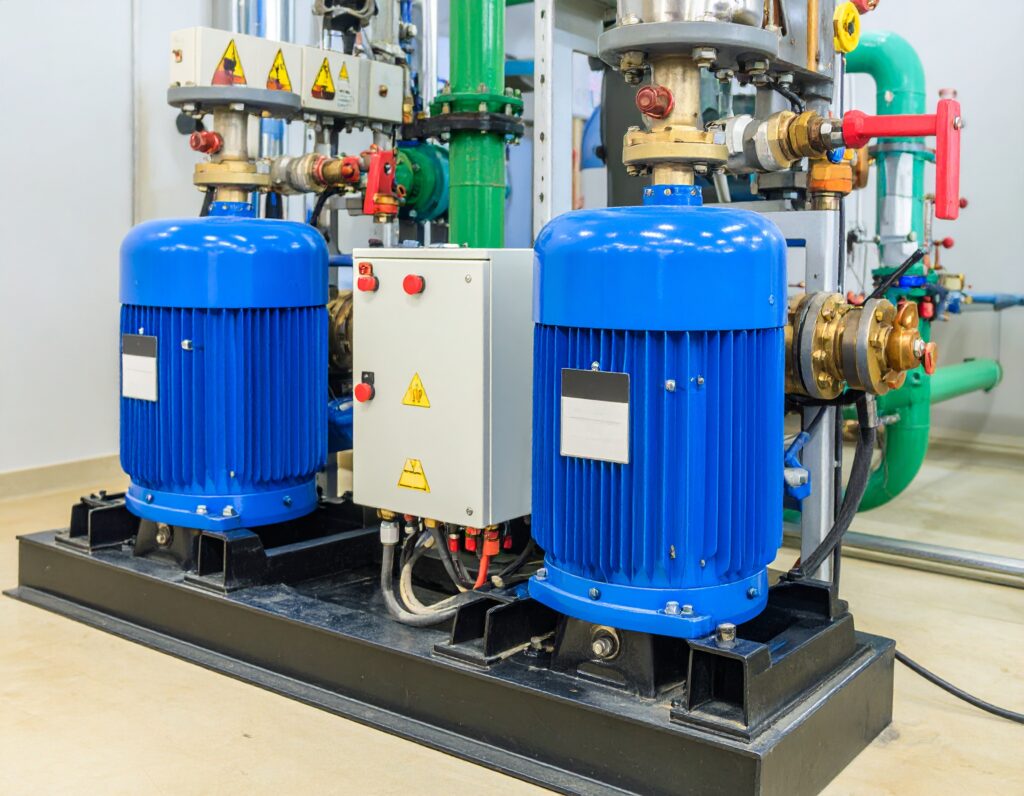
A water booster pump consists of a motor and impellers. It takes water in through an inlet, then forces it out with greater pressure through the outlet.
There are two common types used in commercial sites:
- Single Stage Pumps: Best for low rise buildings.
- Multi Stage Pumps: Ideal for high rises or systems with multiple pressure zones.
The pump works in sync with sensors and control units to maintain constant water pressure regardless of demand.
Where Should You Install a Water Booster Pump in a Commercial Building?
The best installation point is typically right after the main water line enters the building, before the supply splits into floors or sections. This placement allows the booster pump to pressurise the entire system consistently. Choose a dry, well-ventilated, and easily accessible space with nearby electrical access.
Expansion tanks or pressure control valves are sometimes added to prevent excessive cycling and protect the system from pressure fluctuations.
How to Size a Water Booster Pump for Your Building?
Proper sizing matters. A pump that is too powerful wastes energy. A weak one leaves some areas without reliable water flow.
You need to answer:
- How many floors and fixtures are in use?
- What is the building’s highest peak demand?
- How far must water travel from the source?
- What is the pressure at the entry point?
Flow and pressure tests help choose the right power rating, number of impellers, and control features to match your building’s requirements.
What Are the Key Steps in a Commercial Water Booster Pump Installation?
Installing a water booster pump in a commercial building is not a plug-and-play job. It requires methodical planning and execution to make sure the system delivers consistent, regulated pressure throughout your facility.
Initial Assessment and Planning Before anything is installed, the site is evaluated to determine existing water pressure, peak demand, and building layout. This includes analysing elevation differences, pipe lengths, and flow restrictions.
System Design and Equipment Selection Based on the data, engineers select the right pump type, single-stage or multi-stage, and size it appropriately. Controls and sensors are planned into the system to automate pressure regulation.
Plumbing and Electrical Setup Installation includes secure pipework, isolation valves, non-return valves, and connections to existing plumbing infrastructure. Electricals are integrated carefully to maintain system safety and automation compatibility.
Testing and Commissioning Once installed, the system is thoroughly tested for pressure consistency, leaks, and operational performance. Flow rates are calibrated and the system is adjusted to meet regulatory standards.
User Training Onsite maintenance teams are briefed on how to monitor pump function and basic troubleshooting. This helps catch minor issues before they turn into downtime.
What Are the Maintenance Requirements After Installation?
Water booster pump systems need routine checks to operate efficiently and avoid costly interruptions. Key maintenance tasks include:
- Checking impellers, motors, and pressure sensors for wear or faults
- Cleaning strainers, filters, and valves to prevent clogging
- Recalibrating pressure controls and monitoring system output
- Reviewing electrical connections and control panel diagnostics
Regular maintenance not only extends the system’s lifespan but also preserves energy efficiency and flow reliability. Having a service contract can simplify this and keep your operations running without hiccups.
Why Flair Facilities Is a Great Choice for Water Booster Pump Installation
Flair Facilities offers:
- Over 25 years of experience in commercial building systems
- Certified engineers across all London boroughs
- Fast installation with minimal disruption
- Support for all major pump brands
- Transparent reporting and compliance documentation
Our team understands how buildings operate under pressure. We install, optimise, and support your system from start to finish.
Explore our Services here:
- Commercial Gas Boiler Services
- BMS Services
- Commercial Boiler Pump Services
- Gas Purging Services
- Commercial Kitchen and Gas Catering Engineers
- Water Booster Pump Services
- Pressure Testing Services
- Gas Safety Certificate CP42
Installing a commercial water booster pump is a critical investment that directly affects building operations, tenant comfort, and regulatory compliance. A properly planned and maintained system supports consistent water pressure, extends the life of plumbing infrastructure, and reduces energy waste. From site evaluation to regular maintenance, every step must be approached with precision to avoid costly issues down the line. Whether your building faces low supply pressure or rising demand, a well-installed booster system keeps everything running smoothly and reliably.
Frequently Asked Questions
It increases the pressure of water coming into the building so all outlets, from ground floor taps to top-floor showers, get a consistent flow. This helps avoid pressure drops during peak usage times and supports the demands of high-occupancy buildings.
If tenants are complaining about weak showers, or water pressure drops when multiple fixtures run at once, it’s a clear sign. Low mains pressure, tall building height, or long pipe runs also point to the need for a booster system.
In most cases, no major redesign is needed. A proper assessment helps find the best point in the system to install the pump with minimal disruption. It should always be planned to work with your existing setup, not against it.
Single-stage pumps are suited for light-duty applications with moderate pressure needs. Multi-stage pumps, on the other hand, can handle high-rise buildings or heavy-use systems by increasing pressure in multiple steps for greater efficiency and reach.
It can slightly increase energy use, but it also reduces waste from poor flow and pressure fluctuations. When installed and maintained correctly, a booster pump can actually help manage utility costs by making water delivery more efficient.
Most modern systems are designed to run quietly, especially if installed with vibration-reducing materials. Placement matters too. With the right setup, you should barely notice it running.