The efficiency of an air source heat pump depends entirely on how well it is installed. Even the most advanced model can underperform if the setup is inaccurate. Correct installation allows stable temperature control, reduced energy consumption, and consistent comfort all year. Across the UK, property owners are choosing renewable heating to reduce costs and cut emissions. This shift requires precision work from qualified engineers. A well-calibrated system captures and transfers heat energy efficiently, converting it into reliable warmth for homes and businesses.
Flair Facilities delivers professional air source heat pump installations across London. Certified engineers handle every stage from design to commissioning, ensuring your system performs exactly as designed and meets national efficiency standards.
Why Professional Installation Matters for Air Source Heat Pumps
An air source heat pump relies on precise design and calibration to deliver energy efficiency. The system extracts heat from outside air, compresses it, and transfers it indoors for heating and hot water. Its performance depends on accurate sizing, positioning, and setup. When installation is poor, the system may lose pressure, generate unnecessary noise, or waste power. These faults shorten equipment lifespan and raise operating costs. Certified engineers prevent this by assessing insulation levels, property size, and system demand before installation.
Professional installation also ensures compliance with building and renewable energy standards. For property developers, landlords, and homeowners, it secures long-term savings while supporting low-carbon heating targets under UK regulations.
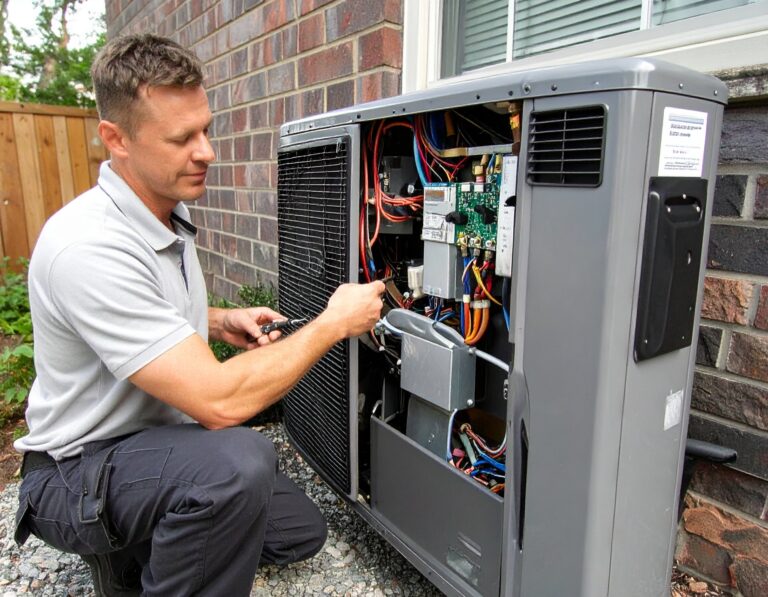
Step-by-Step Air Source Heat Pump Installation Process
Installing an air source heat pump is a precise engineering process that requires design accuracy, environmental assessment, and technical calibration. Flair Facilities engineers follow a meticulous, multi-stage procedure that ensures every component operates at peak performance and complies with UK energy standards.
1. Site Survey and Heat Loss Assessment
Every installation begins with a full property audit. Engineers measure wall thickness, insulation depth, window glazing, floor materials, and air permeability to calculate total heat loss using software-based thermal modelling. This establishes how much heating power the property requires per square metre.
External factors like building orientation, shading, and prevailing wind direction are also recorded, since they influence how efficiently the outdoor unit absorbs ambient heat. For larger buildings, engineers may conduct zonal analysis — dividing the property into separate heating zones to determine how each area will respond to varying demand. This stage prevents under-sizing or oversizing, which are the main causes of poor efficiency in heat pump systems.
2. System Design and Unit Selection
After heat load data is established, engineers design a system layout optimised for the building’s structure and user demand. This involves choosing the correct heat pump model, calculating refrigerant line lengths, and integrating auxiliary components such as buffer tanks or low-loss headers where required.
Placement strategy is critical: the outdoor condenser must have sufficient clearance for airflow and low acoustic reflection, while the indoor hydrobox is positioned close to the main distribution manifold to reduce thermal losses. The design also includes pipe sizing, electrical capacity verification, and assessment of defrost cycles under UK winter conditions. Each design is tailored for balanced heating performance, long-term reliability, and compliance with MCS installation standards.
3. Equipment Installation and System Integration
The installation phase translates design into operation. Engineers mount the outdoor unit on vibration-isolated brackets or ground stands to reduce resonance and noise. The indoor unit is connected using insulated refrigerant pipes that minimise heat loss and protect against frost.
All electrical and control wiring is connected to a dedicated circuit, ensuring balanced load distribution and safety compliance with Part P regulations. Integration with thermostats, smart controllers, and hot water cylinders is completed at this stage. Engineers also check the alignment of refrigerant lines, slope angles for condensate drainage, and protection from external weather exposure.
Every component, from pipe fittings to expansion vessels, is checked for mechanical stability and accessibility for future maintenance. This attention to detail ensures both energy efficiency and system longevity.
4. Pressure and Leak Testing
Before activating the system, engineers conduct comprehensive integrity tests using digital pressure sensors and nitrogen-based leak detection. The refrigerant circuit is pressurised and held under observation to confirm airtight sealing and correct gas volume.
Pressure readings are compared against manufacturer specifications to verify stability under operational load. Engineers also inspect soldered joints, valve seals, and connections for potential micro-leaks using ultrasonic detectors. Even a small refrigerant loss can drop system performance by up to 20%, so this step is non-negotiable.
Once confirmed, the system undergoes vacuum evacuation to remove moisture and non-condensable gases that could interfere with refrigerant efficiency. This phase ensures both reliability and environmental safety.
5. System Commissioning and Calibration
Commissioning transforms installation into a working system. Engineers start the heat pump and monitor real-time parameters such as inlet and outlet temperatures, flow rate, and coefficient of performance (COP). These readings are recorded under steady-state operation to confirm that design targets are achieved.
Control systems are calibrated to maintain temperature accuracy within 0.5°C, and the circulation pump speed is adjusted to match demand while reducing power draw. Engineers also fine-tune defrost cycle timing, ensuring the outdoor coil remains efficient in cold, humid weather.
The final calibration includes testing of domestic hot water priority, thermostat communication, and system start-stop behaviour. This guarantees that the heat pump delivers consistent comfort while maintaining low energy consumption across the seasons.
6. Final Documentation and Handover
Once all checks are complete, the installation concludes with a detailed MCS-compliant commissioning report. This includes:
Full system specifications (model, capacity, refrigerant type, circuit layout)
Recorded readings for temperature, pressure, and flow balance
Performance efficiency data (SCOP and COP results)
Maintenance recommendations and service intervals
Flair Facilities provides both digital and printed copies for property records and compliance verification under Building Regulations Part L. The documentation also acts as a performance baseline, helping future service engineers compare results and maintain consistency over the life of the system.
This handover marks the transition from installation to long-term efficiency — a fully documented, performance-verified heating system ready to deliver reliable comfort and measurable energy savings.
Key Benefits of Expert Heat Pump Installation
A professionally installed air source heat pump performs closer to its theoretical efficiency potential. Precision engineering, correct calibration, and compliance with UK energy standards allow measurable improvements in both performance and lifecycle value.
Below is an analytical summary of how professional installation influences key system parameters compared to non-specialist setups:
| Performance Metric | Impact of Expert Installation | Scientific/Operational Benefit |
|---|---|---|
| Coefficient of Performance (COP) | Maintained within 3.5–4.5 range year-round | Higher thermal efficiency and reduced electrical load |
| Seasonal Coefficient of Performance (SCOP) | Increased by 10–20% through correct calibration and sizing | Improved annual energy yield and lower carbon intensity |
| Heat Distribution Uniformity | ±0.5°C variation between zones | Stable indoor comfort and reduced thermostat cycling |
| Compressor Stress Index | Reduced mechanical load by up to 15% | Longer compressor lifespan and lower failure probability |
| Refrigerant Efficiency Ratio | Optimised through pressure balance and correct charge volume | Stable evaporation/condensation cycle for maximum heat transfer |
| Energy Cost per kWh of Heat | Decreased by up to 25% in monitored installations | Direct operating cost savings for end users |
Common Challenges Solved by Professional Engineers
Every property has unique technical and environmental conditions. Without professional oversight, installation errors can limit performance and cause expensive maintenance later. Engineers address these challenges by optimising airflow, refrigerant levels, and electrical connections.
Incorrect refrigerant charge, poor outdoor placement, or inadequate drainage often lead to reduced efficiency and higher noise. Professional testing identifies these issues early, allowing engineers to adjust control settings and verify proper heat exchange. Each completed installation undergoes performance verification to confirm stable operation even under demanding weather conditions.
This hands-on precision keeps systems reliable, prevents seasonal failures, and maintains energy efficiency across years of continuous use.
Why Choose Flair Facilities for Heat Pump Installation in London
Flair Facilities has become a trusted provider of air source heat pump installations throughout London. The company’s certified engineers bring technical skill and practical experience to every project, whether residential or commercial.
Each installation is backed by transparent service reporting, compliance certification, and ongoing support. Clients benefit from accurate system design, energy-efficient results, and dependable aftercare. With Flair Facilities, installations are built to perform consistently, saving energy while meeting the highest standards of renewable heating performance.
Explore our Services here:
- Commercial Gas Boiler Services
- BMS Services
- Commercial Boiler Pump Services
- Gas Purging Services
- Commercial Kitchen and Gas Catering Engineers
- Water Booster Pump Services
- Pressure Testing Services
- Gas Safety Certificate CP42
- Block Managed Heating Systems
- Heat Interface Unit Services
- Air Source Heat Pump Services
A well-installed air source heat pump offers far more than energy-efficient heating. It represents a commitment to long-term comfort, sustainability, and reduced energy costs. Every component must be installed and calibrated with precision to achieve consistent performance across all seasons.
Flair Facilities provides professional air source heat pump installations throughout London. Certified engineers combine technical knowledge with real-world experience to deliver systems that perform efficiently for years.
Looking to upgrade your property’s heating system? Contact Flair Facilities today to schedule a consultation with certified engineers who install systems built to last.
Frequently Asked Questions
Expert installers measure and balance airflow, refrigerant charge, and thermal load to ensure the system runs within its designed performance range. A few degrees of error in temperature or pressure can cut efficiency by 10–15%, so precision setup directly translates into lower energy bills and smoother heating performance.
Yes. Modern air source heat pumps are engineered to operate efficiently even in sub-zero conditions. When installed correctly, they use variable-speed compressors and adaptive defrost cycles that maintain heat output without overworking the system, ensuring reliable warmth even in cold UK winters.
Lifespan depends heavily on the quality of installation, system calibration, and regular maintenance. A correctly installed and serviced heat pump typically runs for 18–20 years, while poor installation or skipped servicing can reduce that to just 10–12 years. Proper refrigerant pressure and clean coils make a big difference over time.
The correct size is determined through a detailed heat loss calculation, factoring in insulation quality, window glazing, air permeability, and total floor area. Oversized units short-cycle and waste energy; undersized units struggle to maintain comfort. A professional survey ensures the system is perfectly matched to your property’s demand.
In most well-insulated homes, yes. A properly commissioned heat pump produces three to four units of heat for every unit of electricity consumed. That efficiency, known as the Coefficient of Performance (COP) — means your system can deliver the same warmth using significantly less energy than gas or oil boilers.
Maintenance is straightforward but essential. Annual servicing includes cleaning heat exchangers, checking refrigerant pressure, inspecting electrical connections, and verifying control settings. This keeps the system efficient and ensures continued eligibility for manufacturer warranties and MCS certification.