Asbestos Compliance in 2025 is vital for UK businesses. Learn the key steps for safe handling, transport, and legal safety with expert guidance.
Asbestos may no longer be used in modern construction, but it continues to exist in thousands of commercial and industrial properties across the UK. Its fibres, once widely applied in insulation and fireproofing, remain a serious health hazard if disturbed. Diseases linked to asbestos exposure, such as mesothelioma and asbestosis, still claim lives every year.
Despite bans on new use, compliance remains a pressing issue. Buildings constructed before 2000 can still contain asbestos materials hidden in walls, ceilings, and pipework. Businesses therefore carry a responsibility: protect staff, contractors, and the public by identifying, managing, and safely removing or transporting asbestos. Failing to do so is a legal offence and a direct threat to workplace safety.
Current Legal Framework for Asbestos Management
The Control of Asbestos Regulations 2012 remain the backbone of asbestos law in the UK. In 2025, they continue to set out clear duties for employers, landlords, and anyone responsible for non-domestic premises. These rules cover everything from surveys and management plans to removal and disposal.
The Health and Safety Executive (HSE) enforces these regulations. Inspectors can visit sites without notice, demand records, and issue enforcement notices for breaches. Their role is not just reactive but also preventative: they set standards, publish guidance, and prosecute where compliance is ignored.
For businesses, the duty of care is non-negotiable. This includes maintaining an asbestos management plan, ensuring surveys are up to date, and confirming that only licensed contractors handle or transport asbestos materials.
Identifying Asbestos in Commercial Properties
Before any work takes place, asbestos must be identified. In commercial properties, common locations include insulation boards, ceiling tiles, textured coatings, and pipe lagging. Even floor tiles and adhesives in older buildings may contain asbestos.
Two survey types are approved under regulation. A management survey is carried out during normal occupation to locate and monitor asbestos that could be disturbed by everyday activities. A refurbishment and demolition survey is required before any major building work, ensuring that asbestos is identified and removed before construction begins.
Professional identification is critical. Relying on assumptions or visual checks is unsafe and unlawful. Only accredited surveyors with the correct equipment and laboratory support can provide reliable results.
Safe Handling and On-Site Practices
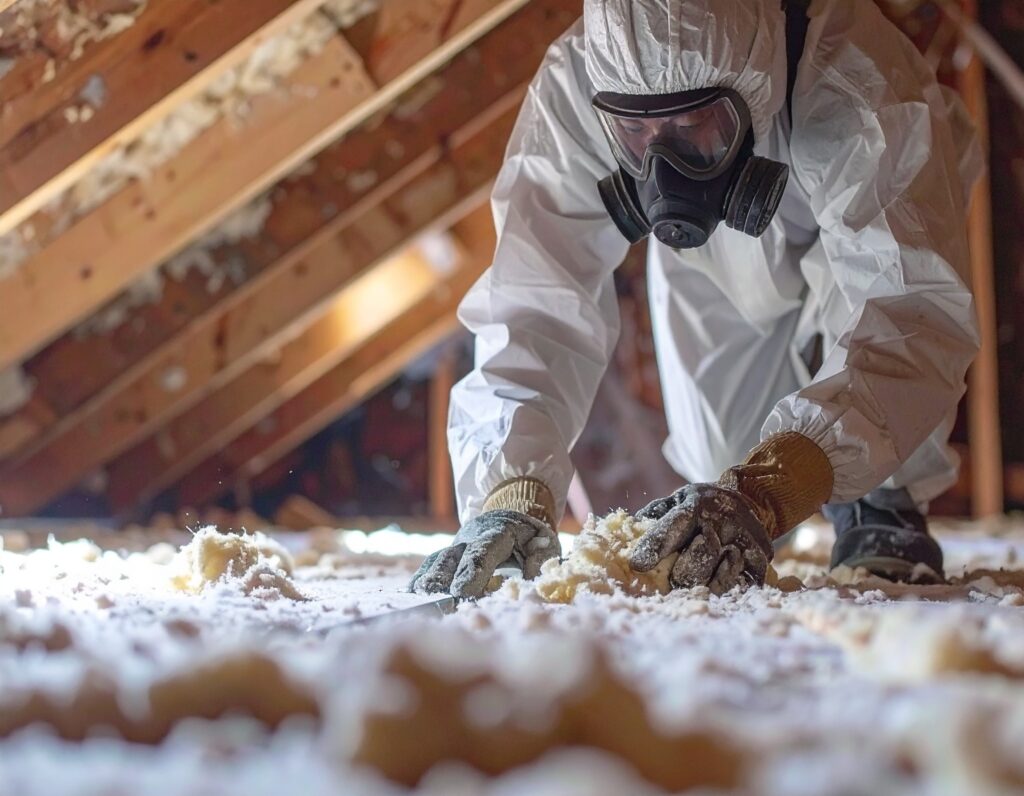
If asbestos is found, handling requires strict controls. Workers must use protective clothing and respiratory equipment designed for asbestos environments. Negative pressure units and controlled enclosures prevent fibre release into surrounding areas. Air monitoring is essential to confirm that conditions remain safe.
Certain practices are strictly prohibited because they create dangerous fibre release. These include dry sweeping, uncontrolled cutting, sanding, and the use of high-powered tools without extraction systems. Approved methods rely on wetting techniques, hand tools, and sealed containment to keep fibres under control.
Approved vs Banned Handling Methods
Handling Practice | Status in 2025 | Reasoning Behind Rule |
Wetting asbestos materials | Approved | Reduces fibre release during removal |
Use of hand tools | Approved | Minimises dust and fibre disturbance |
Controlled enclosure use | Approved | Contains fibres and allows safe air monitoring |
Dry sweeping debris | Banned | Causes widespread airborne fibre release |
High-speed sanding or cutting | Banned | Produces uncontrollable fibre levels |
Compressed air cleaning | Banned | Blows fibres into the atmosphere, uncontrolled risk |
This table illustrates the sharp divide between practices that protect health and those that magnify risk. Businesses must adopt the former without exception.
Transport and Disposal Rules for 2025
Asbestos is classified as hazardous waste under UK law. Transporting it requires compliance with both waste and carriage regulations. Materials must be double-bagged in UN-approved packaging, clearly labelled, and accompanied by consignment notes that trace their journey from site to disposal facility.
Only licensed waste carriers may move asbestos, and it must be delivered to authorised hazardous waste facilities. Documentation must be complete and retained by the business for inspection.
Non-compliance brings severe consequences. HSE and the Environment Agency can issue unlimited fines, revoke licences, and prosecute individuals as well as companies. Beyond legal penalties, reputational damage can be lasting, particularly if public health is endangered.
Training and Competency Standards
No asbestos work can be considered safe without proper training. UK law divides training into three main categories:
- Asbestos awareness: Required for anyone who may encounter asbestos but will not disturb it, such as office staff or maintenance workers.
- Non-licensed training: For workers who may need to handle lower-risk asbestos materials as part of their duties.
- Licensed training: For those carrying out higher-risk asbestos removal, requiring specialist certification and regular refreshers.
Employers are legally responsible for ensuring training is completed, recorded, and kept up to date. Records should be available for inspection and linked to the company’s asbestos management plan.
Business Risks of Ignoring Compliance
Ignoring asbestos regulations is costly. Legal penalties include heavy fines, criminal prosecutions, and even imprisonment for serious breaches. HSE issues hundreds of enforcement notices each year, and courts have consistently upheld strict penalties.
Financial risks extend beyond penalties. Non-compliance can result in insurance claims being rejected, forcing businesses to cover medical or clean-up costs. Projects can also face delays if asbestos is discovered mid-work without proper surveys.
Health risks are the most serious. Asbestos exposure is irreversible in its damage, with illnesses taking decades to develop. For staff, the consequences are life-altering. For businesses, reputational harm is inevitable when workers or the public are put at risk.
Preparing for Compliance Audits and Inspections
HSE inspections are a reality for UK businesses in 2025. Inspectors will ask for asbestos management plans, survey records, and waste transfer documentation. Failure to produce these records is a breach in itself.
To prepare, businesses should:
- Keep surveys up to date and review them regularly.
- Store consignment notes and transfer records for asbestos waste.
- Train staff and maintain written proof of training.
- Schedule routine checks to confirm management plans are active.
Being proactive reduces both legal and operational risks. Businesses that wait until an inspection is announced often find themselves exposed to enforcement action.
Expert Guidance and Market Outlook for 2025
Demand for qualified asbestos professionals is increasing as regulations remain firm and inspections grow stricter. Surveyors, licensed removal contractors, and hazardous waste carriers are all in higher demand.
Technology is beginning to play a role too. Digital asbestos registers, real-time monitoring devices, and improved containment methods are making compliance easier to manage. These innovations do not remove the need for strict adherence to regulations, but they can streamline processes and reduce human error.
The outlook is clear: enforcement is not softening. UK regulators continue to prioritise asbestos safety as part of their wider health and safety agenda. Businesses must adapt or face the consequences.
Building Safer Workplaces Through Compliance
Asbestos compliance is not a matter of choice. It is a legal duty and a moral responsibility that protects staff, clients, and the public. In 2025, businesses must remain vigilant in identifying asbestos, handling it safely, and transporting it within the law.
Compliance delivers more than legal security. It builds safer workplaces, demonstrates corporate responsibility, and protects reputations in a climate where public scrutiny is high. Businesses that act decisively now will be positioned not just for compliance but for safety leadership.
Explore our Services here:
- Commercial Gas Boiler Services
- BMS Services
- Commercial Boiler Pump Services
- Gas Purging Services
- Commercial Kitchen and Gas Catering Engineers
- Water Booster Pump Services
- Pressure Testing Services
- Gas Safety Certificate CP42
Flair Facilities is here to help. Our team of specialists provides asbestos surveys, safe handling, transport, and disposal in full compliance with UK law. Contact us today to secure your business, protect your staff, and stay fully compliant in 2025 and beyond.
Frequently Asked Questions
The Control of Asbestos Regulations 2012 remain in force, setting out duties for surveys, management, removal, and training.
A professional survey by accredited specialists is the only reliable way. Management surveys monitor existing risks, while refurbishment or demolition surveys identify asbestos before major work.
Disposable coveralls, gloves, and respiratory protective equipment are mandatory. Equipment must meet standards for asbestos environments.
Only registered hazardous waste carriers can move asbestos. Waste must go to authorised disposal sites with full documentation.
Surveys, management plans, training records, and waste consignment notes. These documents must be available for HSE inspections.
Awareness training is required for those who may encounter asbestos. Workers handling asbestos need non-licensed or licensed training depending on risk level.