Propane powers heating and energy with efficiency, safety, and flexibility. Learn why UK businesses in 2025 rely on propane for cost savings and compliance. Propane is one of the most versatile fuels in commercial heating and power. It supplies heat, hot water, and energy to buildings where reliability cannot be compromised. In 2025, as UK energy regulations tighten, propane continues to serve as a bridge between traditional fuels and renewable technologies.
Its popularity is supported by storage flexibility, clean-burning properties, and efficiency in both small-scale and industrial systems. Propane can be delivered directly to sites, making it suitable for locations outside the natural gas grid. It also complements hybrid systems, ensuring businesses meet energy demand without performance loss.
Why Businesses Choose Propane Today
Propane is selected by businesses for its efficiency, cost control, and adaptability. Compared to oil, it offers higher combustion efficiency and fewer carbon emissions. When paired with modern boilers and smart controls, propane delivers consistent energy output while lowering consumption.
Propane systems can be installed with high insulation standards and advanced modulation controls. This reduces wasted fuel and improves load matching, ensuring equipment operates at its most efficient capacity. For businesses monitoring sustainability targets, propane is also favourable in lifecycle assessments since it produces fewer greenhouse gases per unit of heat compared with oil.
Propane in Commercial and Industrial Use
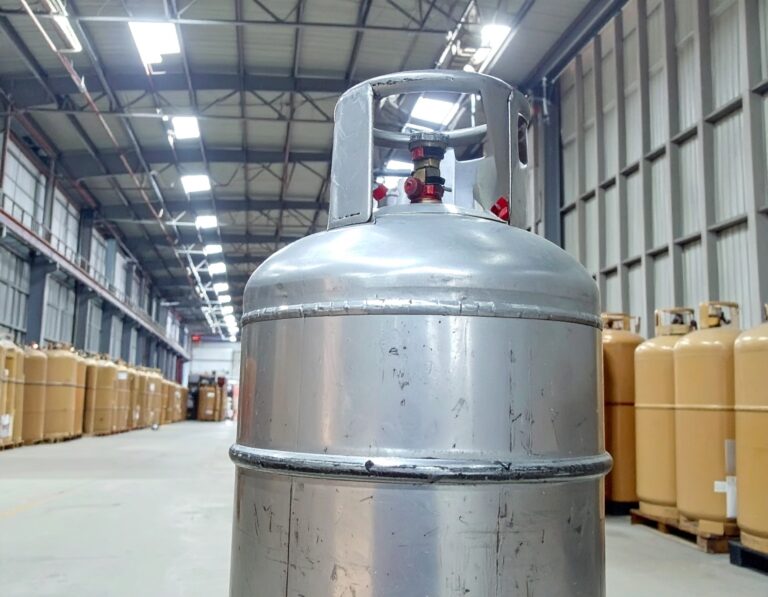
Propane plays a critical role across sectors where heat and power are essential. Laundries rely on propane-fired boilers for continuous cycles of hot water and steam. Hospitals and care facilities require uninterrupted heating and sterilisation systems, where propane provides both reliability and safety. In industrial settings, propane supports process heating for manufacturing lines, metalwork, and food processing. Its high calorific value means it can achieve high temperatures quickly, reducing production time. Backup generators powered by propane are increasingly used in data centres, offices, and retail spaces where continuity of service is vital.
Propane Safety Rules for 2025
The UK applies rigorous regulations to all propane systems. The Control of Asbestos Regulations 2012 does not apply here, but the Gas Safety (Installation and Use) Regulations, Hazardous Substances Regulations, and specific HSE guidance do. These outline duties for installation, storage, and ongoing servicing. Gas Safe registration is mandatory for engineers working on propane systems. Inspections must confirm the integrity of pipework, cylinder storage, and pressure controls. Compliance documentation must be retained for regulatory audits, and many insurers require proof of Gas Safe certification for coverage.
Local authorities and the Environment Agency also monitor large-scale storage and environmental impact. Failure to comply with these standards can result in financial penalties, invalidated insurance, and criminal liability.
The Science of Propane Efficiency
Propane’s efficiency is rooted in its chemical composition. It is a hydrocarbon with a high hydrogen-to-carbon ratio, allowing it to burn with fewer carbon emissions compared to oil. The fuel releases approximately 25 MJ per litre, making it energy-dense and efficient in space-constrained storage.
During combustion, propane produces water vapour and carbon dioxide with minimal sulphur dioxide or particulates. This results in lower emissions of harmful pollutants such as NOx and SOx. Propane vapourises under normal atmospheric conditions, making storage and use straightforward.
Advances in burner design now allow near-complete combustion, maximising energy transfer and reducing waste gases. High-efficiency condensing systems can recover heat from exhaust gases, further raising efficiency levels above 90 percent.
Propane vs Natural Gas vs Oil
| Fuel Type | Combustion Efficiency | CO₂ Emissions (kg/kWh) | Storage Flexibility | Suitable Applications |
|---|---|---|---|---|
| Propane | 85–95% | ~0.24 | On-site cylinders or bulk tanks | Boilers, process heating, hybrid systems |
| Natural Gas | 80–90% | ~0.20 | Grid dependent | Urban heating, large commercial buildings |
| Oil | 70–85% | ~0.27 | Delivery required | Legacy boilers, rural systems still transitioning |
Risks of Poorly Managed Propane Systems
Poor management of propane leads to health, safety, and financial consequences. Leaks caused by faulty seals or corroded pipework increase the risk of fire or explosion. Unventilated areas with propane build-up create immediate hazards for staff and contractors. Maintenance neglect reduces combustion efficiency, leading to incomplete fuel burn and wasted energy. This drives up operational costs and emissions, weakening compliance records. Businesses may also face invalidated insurance claims and HSE prosecution if evidence of poor maintenance emerges after an incident.
Modern Applications Beyond Heating
Propane’s applications extend into multiple sectors beyond heating. Backup generators fuelled by propane provide resilient power during outages, especially in healthcare, retail, and data-driven industries. Propane is also used in hybrid systems where it balances intermittent renewable energy. For example, when heat pumps operate less efficiently during cold spells, propane boilers can meet demand without strain. Agriculture relies on propane for crop drying, poultry heating, and greenhouse operations, where consistent heat is critical. In logistics, propane is increasingly used in forklift fleets because it burns cleanly and reduces indoor air pollution.
Business Benefits of Professional Propane Services
Professional installation and maintenance of propane systems create measurable advantages. Properly maintained systems last longer, consume less fuel, and operate with fewer breakdowns. This reduces lifetime costs while improving energy reliability. Servicing by certified engineers ensures that systems meet safety standards and produce the required compliance documents. For businesses, this protects against fines, audit failures, and insurance complications. The presence of accurate records also strengthens ESG reporting, which is becoming an expectation in 2025 across many industries.
Expertise in Propane Systems
Flair Facilities provides over 25 years of experience in propane installations and maintenance. Their engineers are fully certified and trained to deliver services across healthcare, hospitality, industrial, and commercial settings. The company manages all stages, from demand assessment and system design to installation, servicing, and compliance certification. Flair Facilities is recognised for its accuracy, responsiveness, and reliable documentation, giving businesses confidence in both operational performance and regulatory compliance.
Preparing for a Propane System Upgrade
Businesses preparing for propane upgrades must review energy consumption records, assess current system performance, and identify compliance gaps. Planning should account for peak operational periods to minimise disruption.
Engineers require clear access to plant rooms and storage areas, while compliance documents must be updated before inspections. A thorough site assessment ensures that the system is sized correctly, avoiding inefficiency caused by oversized or undersized installations.
Smarter Energy with Propane
Propane remains a critical energy solution in 2025. It balances performance, compliance, and environmental responsibilities, making it suitable for a wide range of businesses. For organisations aiming to cut costs, strengthen compliance, and future-proof operations, propane delivers measurable results. With professional installation and servicing, it offers safety, efficiency, and long-term reliability. Flair Facilities provides the expertise required for businesses in London to make propane part of their smarter energy strategy.
Explore our Services here:
- Commercial Gas Boiler Services
- BMS Services
- Commercial Boiler Pump Services
- Gas Purging Services
- Commercial Kitchen and Gas Catering Engineers
- Water Booster Pump Services
- Pressure Testing Services
- Gas Safety Certificate CP42
Frequently Asked Questions
Propane remains cost-effective, efficient, and widely available. It supports both heating and power applications, helping businesses meet compliance while managing rising energy costs.
Electric systems work well in smaller applications but can struggle with demand peaks. Propane provides consistent output and often costs less when high volumes of heat are required.
Yes. Propane boilers and generators can back up renewable systems like solar and heat pumps, ensuring continuity when renewable output fluctuates.
Systems must be installed and serviced by Gas Safe registered engineers. Checks include leak detection, cylinder condition, pressure testing, and record keeping for audits.
Propane is one of the best options for off-grid locations because it can be delivered in bulk tanks or cylinders, ensuring reliable heating and power without grid dependency.
Propane produces lower CO₂ and negligible sulphur emissions. It burns cleaner, which reduces environmental impact and helps businesses meet sustainability targets.