Explore the best heating systems for large London facilities. Compare gas, heat pumps, and CHP options for efficiency and compliance. Heating large commercial and industrial buildings in London presents challenges that go beyond comfort. The city’s mixed climate, with cold winters and mild transitions, demands heating systems that balance power, efficiency, and compliance. Large facilities must deliver consistent warmth while managing operational costs and adhering to strict environmental regulations.
Efficiency and scalability are essential for modern operations. A poorly chosen system increases energy waste, affects employee comfort, and raises maintenance costs. Conversely, the right setup lowers fuel consumption, improves air quality, and supports sustainability goals.
Choosing the best system is not only a technical matter but also a strategic investment. London’s heating standards, including emission limits and efficiency targets, push businesses to select solutions that reduce carbon output. Incentives such as the Boiler Upgrade Scheme and energy-efficiency grants further encourage the shift toward sustainable systems. The right heating system keeps a facility compliant, cost-effective, and future-ready.
Defining Large Facilities and Their Heating Needs
A large facility in London typically refers to buildings such as warehouses, hospitals, schools, hotels, office complexes, and industrial plants. These environments differ from residential spaces in both heat demand and operational scale. Heating them requires higher output, centralised distribution, and integration with ventilation or process systems.
In smaller properties, heating usually depends on simple controls and a few radiators. Large-scale environments operate with complex layouts, requiring zoning and advanced controls to maintain even temperature distribution. Each area may have unique requirements — a hospital ward, for example, needs different conditions compared to a warehouse storage zone.
System design plays a greater role than size alone. Engineers must calculate total heat load accurately and factor in insulation quality, ceiling height, and air leakage. Oversizing leads to energy waste, while undersizing causes temperature imbalance and strain on components. Proper zoning, smart controls, and precise calculations ensure performance stability and lower lifecycle costs.
A large facility’s design determines which heating technologies are suitable. A well-insulated office tower can benefit from low-temperature heat pumps, while an older factory may need a gas-based or hybrid system to meet output requirements. Correct design ensures long-term efficiency and avoids premature system failure.
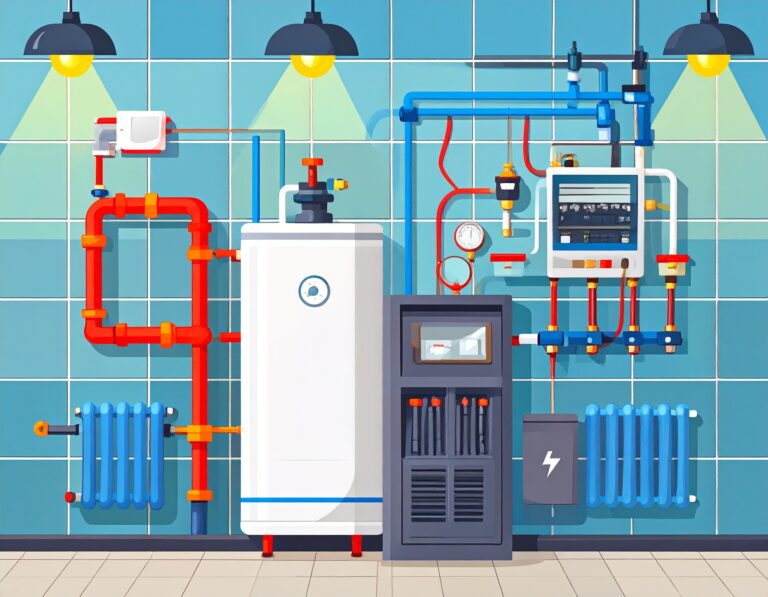
Best Heating Systems for Large Buildings in London
London’s commercial and industrial sectors rely on a mix of traditional and modern systems. The choice depends on building type, energy goals, and available infrastructure. The most common systems include gas boilers, air and ground source heat pumps, combined heat and power (CHP) units, and biomass boilers.
Each system varies in installation cost, energy performance, and maintenance requirements. Gas boilers remain reliable and cost-effective for high-output needs. Heat pumps reduce carbon emissions and qualify for incentives. CHP systems provide dual benefits of heat and electricity, while biomass options appeal to businesses focused on renewable energy.
Integrating these systems with a Building Management System (BMS) enhances efficiency and oversight. BMS technology allows facility managers to track performance, schedule maintenance, and optimise energy use automatically. A connected system reduces waste and supports compliance with London’s emission standards.
A. Commercial Gas Boilers
Gas boilers remain the most widely used heating systems in London’s large facilities. They provide strong heat output, fast response, and compatibility with existing infrastructure. Modern condensing models achieve high efficiency by capturing waste heat from exhaust gases, reducing fuel use and emissions.
Condensing boilers meet London’s environmental requirements and perform well in both retrofit and new installations. Their ability to maintain stable temperature under heavy demand makes them ideal for office complexes, manufacturing plants, and hotels. Systems can be configured in cascades, allowing several smaller boilers to share the load and maintain redundancy.
Commercial gas boilers also integrate easily with BMS controls for better scheduling and temperature management. Though they rely on natural gas, new hydrogen-ready models are emerging, preparing facilities for future fuel transitions. Regular maintenance, flue inspection, and combustion checks are critical for safety and performance consistency.
B. Air Source Heat Pumps (ASHPs)
Air Source Heat Pumps use outside air to generate heat for indoor use. In London’s mild climate, they operate efficiently throughout the year, making them a practical choice for large facilities seeking reduced carbon output. Their performance depends on the Coefficient of Performance (COP), which measures heat produced versus energy consumed.
Modern ASHPs feature smart defrost cycles that maintain performance during cold periods. When combined with advanced controls and proper zoning, they can reach impressive seasonal efficiency ratios. Integration with underfloor heating or fan coil units allows even temperature distribution across large spaces.
These systems are ideal for hybrid heating setups, where they operate alongside gas boilers. The hybrid configuration enables lower running costs and emission reduction without sacrificing reliability. ASHPs also qualify for government-backed energy incentives, improving their return on investment.
C. Ground Source Heat Pumps (GSHPs)
Ground Source Heat Pumps extract heat from the ground through buried loops. Their efficiency remains stable regardless of air temperature, making them effective in large buildings with consistent demand. Although installation requires drilling or trenching, GSHPs provide some of the highest efficiency levels among all systems.
Urban London sites often face space limitations, which can make ground installations complex. However, buildings with available land, such as schools or business parks, can benefit significantly. The steady ground temperature allows the system to maintain efficiency throughout winter, reducing reliance on fossil fuels.
GSHPs pair well with low-temperature radiators or underfloor systems to maximise output efficiency. They also integrate smoothly with solar thermal or photovoltaic systems, forming a complete renewable heating solution. Maintenance is minimal compared to combustion-based systems, focusing mainly on pump and loop inspections.
D. Combined Heat and Power (CHP) Systems
Combined Heat and Power systems generate both electricity and heat from a single energy source. They capture waste heat from power generation and reuse it for heating, improving overall efficiency. This dual function makes CHP systems a strong choice for large buildings that require consistent power and thermal energy.
Hospitals, universities, and industrial facilities often benefit from CHP setups because they run continuously, ensuring maximum efficiency. These systems can reach efficiency levels above 80 percent, far higher than conventional boilers. Their reliability and energy savings make them ideal for facilities with steady operational hours.
CHP systems align with the UK’s energy efficiency goals. Many installations qualify for carbon reduction incentives, helping businesses offset installation costs. Integration with Building Management Systems improves monitoring, allowing operators to balance electricity and heat production based on real-time demand.
E. Biomass Boilers
Biomass boilers use organic materials such as wood pellets, chips, or logs to generate heat. They appeal to organisations aiming to cut carbon emissions and transition toward renewable energy. For facilities with storage space, biomass offers a sustainable alternative to gas or oil-based systems.
The carbon footprint of biomass is significantly lower because the fuel sources are renewable. However, space and logistics remain important considerations. These boilers require large storage areas and regular fuel deliveries, which can be challenging for dense urban areas in London.
Biomass systems are best suited for rural or suburban facilities where delivery access and space are available. Regular cleaning and ash removal are necessary to maintain performance. When managed correctly, biomass boilers deliver stable heat output and long-term sustainability benefits, particularly for schools, leisure centres, and business parks.
Choosing the Right Heating System for Your Facility
Selecting the right heating system begins with a structured evaluation process. Each stage requires careful assessment to align the system’s capacity and technology with the building’s requirements.
Step 1: Conduct an Energy Audit
Start with a detailed energy audit to assess current consumption, insulation levels, and peak demand. The audit identifies inefficiencies and helps determine the system capacity needed for consistent heating.
Step 2: Perform Heat Load Calculations
Accurate heat load calculations ensure the system is neither oversized nor undersized. Calculations must account for floor area, building materials, and occupancy patterns.
Step 3: Compare System Options
Review the pros and cons of each heating type. Consider fuel availability, space constraints, and integration with existing systems. Compare installation cost, operational expenses, and maintenance demands over time.
Step 4: Seek Expert Consultation
Consult mechanical engineers or certified installers for technical guidance. Professionals can design systems that comply with London’s efficiency standards and reduce long-term costs.
Step 5: Plan for Future Regulations
UK decarbonisation goals will affect future heating policies. Selecting low-emission systems such as heat pumps or hybrid units prepares facilities for compliance with upcoming standards.
Balancing capital cost, operating cost, and life expectancy defines long-term success. An efficient system may have a higher initial investment but pays back through reduced energy bills and compliance with carbon regulations.
Efficiency and Sustainability Factors to Consider
Energy efficiency defines the long-term performance of any heating system. Large facilities can reduce costs and environmental impact by investing in high-efficiency technologies and controls.
Energy Efficiency Ratings and Building Insulation
A building’s insulation directly influences heating demand. Poor insulation forces systems to work harder, wasting fuel. Upgrading wall, roof, and window insulation before installing a new system enhances performance and reduces operational load.
Integration with Building Management Systems (BMS)
BMS integration allows centralised control of heating, cooling, and ventilation. It enables automated scheduling and real-time performance tracking. Managers can adjust temperatures based on occupancy, reducing unnecessary energy use.
Performance Metrics: SEER and COP
Seasonal Energy Efficiency Ratio (SEER) and Coefficient of Performance (COP) measure a system’s efficiency. A higher rating means better energy conversion. For heat pumps and CHP systems, consistent monitoring ensures these values stay within optimal range.
Smart Controls and Predictive Maintenance
Smart thermostats and predictive systems use sensors to adjust heating in real time. Predictive maintenance tools detect irregularities early, preventing breakdowns and extending equipment life.
Sustainability strategies go beyond equipment choice. Combining efficient systems with renewable sources and digital monitoring maximises performance and supports London’s low-carbon targets.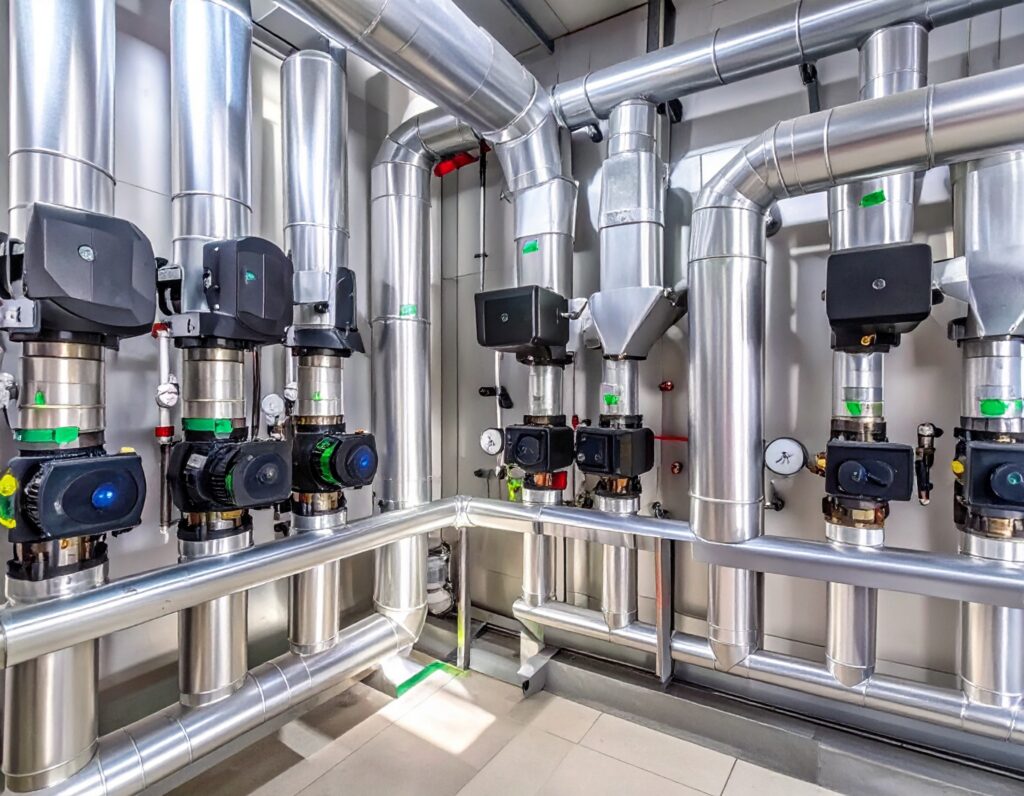
Heating System Compliance and Safety in London
Every large heating system in London must meet strict standards that govern safety, efficiency, and environmental impact. Compliance is not optional; it is the foundation of responsible facility management.
The cornerstone of this framework is Building Regulations Part L, which sets energy efficiency requirements for all new and upgraded systems. It ensures that installations reduce fuel consumption and limit carbon output. Engineers designing large-scale heating systems must calculate heat loss precisely, specify efficient components, and document compliance for inspection.
Alongside energy performance, the Health and Safety Executive (HSE) enforces operational safety. Boiler rooms, for example, require adequate ventilation, emergency controls, and safe access points. Every valve, flue, and control mechanism must function reliably to prevent accidents. Regular inspections and safety logs are mandatory, as neglect can lead to penalties or operational shutdowns.
Only qualified professionals may work on gas systems. Gas Safe certification is the legal standard, proving that engineers understand current regulations and installation procedures. Using uncertified contractors puts both safety and insurance coverage at risk. Facilities that rely on multiple boiler systems or high-pressure plants must keep full service records to show compliance during audits.
Local councils also play a role in large installations, especially in London’s dense commercial zones. Some projects require environmental assessments or planning permission to ensure noise control and emission compliance. Early coordination with local authorities avoids delays and prevents costly redesigns.
Compliance extends beyond paperwork. It represents the discipline of maintaining a safe, efficient, and lawful heating environment for occupants and staff. Facilities that treat regulation as a strategic priority operate more reliably and earn long-term trust from regulators and clients alike.
Installation and Maintenance for Facility Managers
Installing a heating system in a large facility is a complex process that demands accuracy at every stage. From the first drawing to the final inspection, success depends on coordination between design engineers, contractors, and management teams.
Planning begins with a full mechanical survey of the building. Engineers assess load requirements, zoning needs, and control integration. These studies determine whether the facility can support the chosen technology and identify areas where efficiency can be improved. Once the design is finalised, the installation team connects the system to the existing infrastructure and calibrates the controls.
Commissioning follows installation. Every component is tested for pressure stability, airflow, and thermal consistency. Sensors and thermostats are verified for accuracy, and BMS systems are programmed for automatic operation. The process ends with a detailed inspection report that confirms regulatory compliance and operational readiness.
Once installed, the real challenge is maintenance. Even the most advanced system will lose efficiency if neglected. Routine inspections prevent mechanical failure and identify components that need recalibration. In gas boilers, this means testing combustion and checking the flue. In heat pump systems, this includes refrigerant analysis and control adjustments. Predictive maintenance, supported by digital monitoring, now allows engineers to detect faults before they cause breakdowns.
Reliable service providers are essential partners in this process. Skilled mechanical engineers understand both the technical and legal dimensions of heating maintenance. They complete servicing efficiently, keep accurate documentation, and maintain performance standards throughout the system’s lifespan. Regular maintenance not only preserves safety but also reduces energy waste and downtime.
A consistent maintenance strategy transforms heating from a cost centre into a long-term asset. Facilities that prioritise professional upkeep see measurable savings in fuel, fewer breakdowns, and a longer operational life for their systems.
Heating System Costs and Long-Term Value
Choosing a heating system for a large facility means looking beyond purchase price. True value comes from efficiency, lifespan, and energy stability. Gas boilers cost less to install but face rising fuel expenses. Heat pumps and CHP systems need higher capital but return strong savings through reduced energy use. Biomass remains attractive for long-term carbon goals when space allows.
Comparison of Heating Systems for Large Facilities in London (2025)
| System Type | Install Cost (£/kW) | Efficiency (%) or COP | Lifespan (Years) | Carbon Emissions (kgCO₂/kWh) | Payback (Years) |
|---|---|---|---|---|---|
| Commercial Gas Boiler | 70–120 | 85–92 | 15–20 | 0.21 | 5–7 |
| Air Source Heat Pump (ASHP) | 180–250 | 300–400% COP | 15–20 | 0.05–0.07 | 7–10 |
| Ground Source Heat Pump (GSHP) | 250–400 | 350–450% COP | 20–25 | 0.04–0.06 | 8–12 |
| Combined Heat and Power (CHP) | 400–600 | 75–85 | 15–20 | 0.10–0.15 | 6–9 |
| Biomass Boiler | 300–500 | 75–88 | 15–20 | 0.02–0.03 | 8–12 |
| Hybrid (Gas + Heat Pump) | 250–350 | 250–350% COP | 15–20 | 0.07–0.10 | 7–9 |
Working with a Trusted London Heating Specialist
Selecting the right heating technology is only part of the equation. The installation, maintenance, and ongoing performance of a system depend heavily on the expertise of the company managing it. Partnering with a qualified London-based specialist ensures compliance, continuity, and efficiency throughout the system’s life.
Local expertise provides direct advantages. Engineers who understand London’s regulatory environment can handle permits, inspections, and emission assessments without delay. Their familiarity with council procedures speeds up project approval and ensures installation meets all legal standards.
Flair Facilities stands as an example of professional service in this field. The company offers complete heating and mechanical solutions for commercial and industrial buildings across London. Their certified engineers specialise in boiler systems, heat pumps, CHP units, and BMS integration. With more than twenty-five years of experience, Flair Facilities delivers efficient installations, responsive maintenance, and detailed compliance reporting for each client.
Partnering with a trusted firm also guarantees accountability. A single provider managing installation, service, and monitoring reduces miscommunication and improves reliability. Facilities gain a long-term technical partner who understands the system’s full history and can optimise it through its operational life.
The strength of a heating system depends on the skill of those who design and maintain it. Working with a London-based specialist transforms heating infrastructure into a stable, efficient, and compliant asset.
Explore our Services here:
- Commercial Gas Boiler Services
- BMS Services
- Commercial Boiler Pump Services
- Gas Purging Services
- Commercial Kitchen and Gas Catering Engineers
- Water Booster Pump Services
- Pressure Testing Services
- Gas Safety Certificate CP42
Frequently Asked Questions
In most London facilities, a hybrid system that combines gas boilers with air source heat pumps delivers the best balance. It keeps capital costs reasonable while improving seasonal efficiency and cutting emissions. The boiler covers high-load periods, and the heat pump handles mild-weather heating efficiently.
Yes, if the building is well insulated and has room for external units. Many older properties in London can accommodate heat pumps through staged upgrades. Engineers often retain part of the existing pipework and add variable-speed controls to match modern system efficiency.
London’s mild maritime climate favours heat pumps because outdoor temperatures rarely drop low enough to cause efficiency losses. Gas systems still perform well, but their advantage in extreme cold is less relevant in the city’s typical conditions.
Many projects focus too much on upfront cost and overlook total lifecycle value. The cheapest installation often leads to higher long-term expenses through fuel waste and unplanned repairs. The smarter approach is evaluating cost per kilowatt-hour over the system’s full lifespan.
BMS integration is crucial. It allows centralised control, data logging, and predictive adjustments. In large facilities, BMS can cut heating energy use by up to 20 percent by matching system output to occupancy and outside temperature.
Yes, though practicality depends on site conditions. Ground source heat pumps, air source heat pumps, and biomass boilers can operate as stand-alone systems if designed correctly. However, hybrid setups remain popular because they provide flexibility during peak winter demand.