Learn how the Boiler Upgrade Scheme in 2025 supports UK homes with cleaner heating, covering grants, eligibility, and low-carbon technology options.
The Boiler Upgrade Scheme (BUS) continues to be one of the UK government’s major financial incentives aimed at accelerating the shift from fossil fuel heating systems to low-carbon alternatives. In 2025, the scheme becomes even more critical as the UK strengthens its net zero commitments and tightens building decarbonisation targets. Homeowners and property developers who are planning to replace an old gas or oil boiler with a heat pump or biomass system now have greater support and tighter requirements.
The BUS is not a grant you apply for directly as a homeowner. It works through installers, who manage the application on your behalf and deduct the value from the upfront installation cost. While the application process is simple for property owners, the technical eligibility, documentation, and installer accreditation need closer attention. If you’re thinking about applying, understanding the scheme’s structure and how the 2025 changes impact you is crucial.
What Is the Boiler Upgrade Scheme and Who Funds It?
The Boiler Upgrade Scheme is a UK government-backed programme administered by Ofgem. It provides fixed-amount grants to support the installation of low-carbon heating technologies in homes and small non-domestic buildings in England and Wales. The funding is part of the UK Government’s broader Net Zero Strategy and Clean Heat Grant initiative.
The scheme originally launched in 2022 and has since been extended to at least 2028. For 2025, the budget allocation remains strong, with continued support for air source heat pumps, ground source heat pumps, and, in specific rural settings, biomass boilers. The BUS aims to make low-carbon heating more affordable while reducing reliance on gas and oil heating.
How Much Can You Get Through BUS in 2025?
Here are the current fixed grant values available through the BUS in 2025:
- £7,500 for air source heat pumps
- £7,500 for ground source heat pumps
- £5,000 for biomass boilers (in rural off-gas areas only)
These grants are applied directly to the cost of the installation and are only available for properties with a valid Energy Performance Certificate (EPC) showing no outstanding insulation recommendations. The scheme does not cover hybrid systems or solar thermal installations.
Who Is Eligible for the Boiler Upgrade Scheme in 2025?
Eligibility rules for the BUS haven’t changed much in 2025, but you still need to meet specific conditions to qualify:
- Property must be in England or Wales (Scotland and Northern Ireland have separate support schemes).
- Property must have a valid EPC issued in the past 10 years, without outstanding loft or cavity wall insulation recommendations (unless exempt).
- Installations must be carried out by a BUS-registered installer certified under the Microgeneration Certification Scheme (MCS).
- The heating system being replaced must be fossil fuel-based—oil, LPG, coal, or mains gas.
- New-build homes are not eligible, unless they are self-built.
The scheme is open to owner-occupiers, private landlords, and small businesses. Social housing and large commercial buildings are excluded. For those in mixed-use buildings, eligibility is based on heating demand and whether the building qualifies as a “small non-domestic property.”
What Heating Systems Are Covered?
The BUS only supports three low-carbon technologies in 2025:
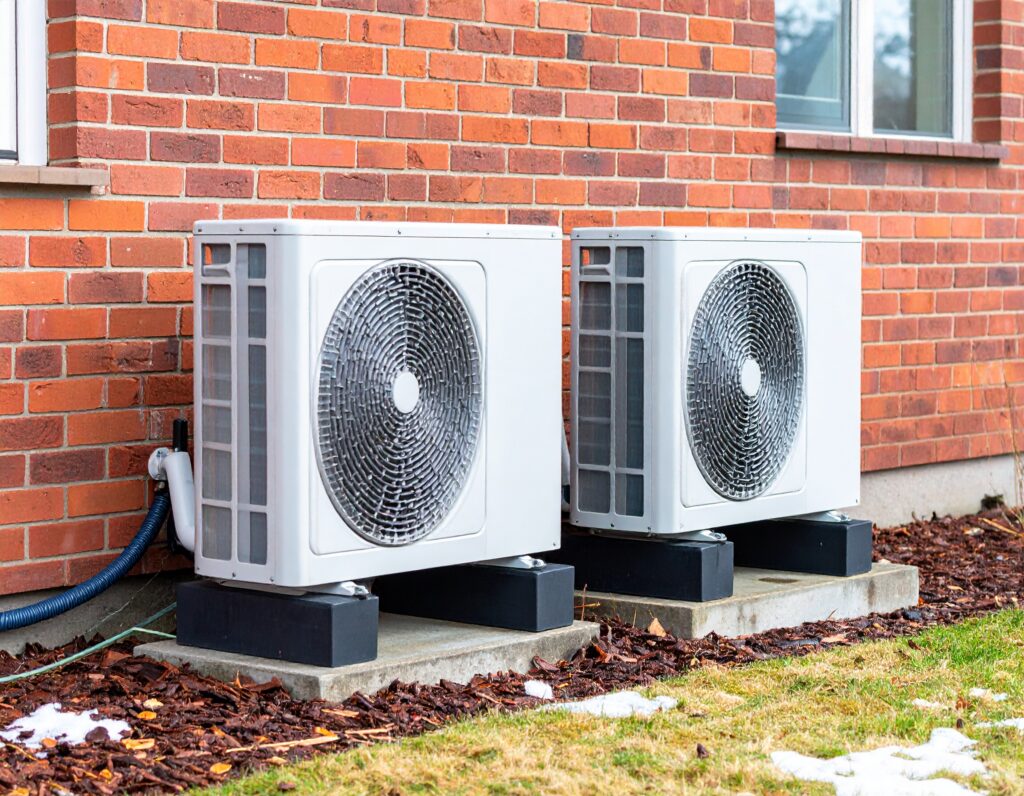
- Air Source Heat Pumps (ASHPs)
These extract heat from the outside air and are the most commonly installed BUS-supported systems. Ideal for most homes with moderate insulation levels. - Ground Source Heat Pumps (GSHPs)
These pull heat from underground. They’re more efficient but come with higher upfront installation costs. Suitable for properties with outdoor space. - Biomass Boilers
Available only for rural off-grid homes that meet strict air quality criteria. These systems burn wood pellets or chips and require space for fuel storage.
Hybrid systems that include a gas boiler component and solar thermal systems are not eligible under BUS 2025. All systems must be capable of heating the entire property independently.
Can You Combine BUS With Other Grants or Financing?
No. The Boiler Upgrade Scheme cannot be combined with any other public funding for the same installation. That includes local authority grants, ECO4, or other renewable heat incentives. However, private financing or green home loans can be used to cover the remaining cost after the grant is applied.
How Much Funding Can You Get Under BUS 2025?
The Boiler Upgrade Scheme provides fixed one-off grants depending on the type of system you install:
- £7,500 for air source heat pumps
- £7,500 for ground source heat pumps
- £5,000 for eligible biomass boilers
These amounts go directly to the installer, not the homeowner. This keeps the process simple. The grant is then deducted from the total installation cost, so you see the savings upfront on your quote.
If your air source heat pump costs £13,000 to install, for example, you’ll only pay £5,500 once the £7,500 grant is applied. It’s a straightforward subsidy that removes the paperwork from your side.
The grant covers heat pump units, associated pipework, cylinders, and installation costs. It doesn’t cover insulation upgrades, radiator replacements, or any electrical works beyond the heating system.
What Is the Boiler Upgrade Scheme Application Process?
You don’t need to fill out lengthy government forms or go through complicated approval stages. The process is installer-led, making it far less stressful for property owners.
Here’s how it works:
- Choose an MCS-certified installer who is registered with the BUS scheme.
- The installer performs a site survey and confirms your system is eligible.
- They apply for the grant on your behalf through Ofgem.
- You get a quote with the grant amount already deducted.
- You confirm you’re happy with the proposal.
- The installer completes the work, and Ofgem pays the grant directly to them.
This flow keeps things moving quickly. But it also puts responsibility on the installer to make sure all eligibility and technical criteria are met.
What Are the Deadlines and Timelines for BUS?
The current scheme is scheduled to run until April 2028, but funding allocations are reviewed year by year. The government has committed a budget of £450 million across three years, though uptake will influence how long funds last.
Once your installer submits the voucher application, you typically have 3 months to install an air source heat pump or 6 months for a ground source system. Extensions are rare and usually require a strong reason, like site delays or planning permission issues.
If the system isn’t installed within the voucher period, the grant offer expires—you’d need to reapply, and availability isn’t guaranteed.
What Are the Common Misunderstandings About the Boiler Upgrade Scheme?
Despite being a generous scheme, BUS is often misunderstood. Here are some key clarifications:
- It doesn’t cover boiler replacements like-for-like. Replacing an old gas boiler with a new gas system isn’t eligible. It’s meant for upgrading to low-carbon heating systems.
- You still need to pay part of the cost. The grant reduces your bill, but it won’t make the upgrade free. Be prepared to pay the remainder.
- You can’t apply for the grant yourself. Only your installer can do it through the official BUS application system. Trying to apply independently will stall your process.
- It doesn’t include non-domestic buildings. BUS is for homes and small business premises. Large commercial buildings must explore other schemes, such as the Green Heat Network Fund.
These details trip people up during planning. Make sure you talk openly with your installer about what’s included—and what isn’t.
Is BUS Worth It for Landlords and Small Businesses?
Yes, if the property is eligible. Landlords can use the scheme to upgrade rental homes, provided they meet the insulation and EPC standards. This can future-proof their assets and improve energy ratings ahead of future legislation.
Small businesses in buildings with an EPC rating and compliant heating systems can also benefit. If you’re running a small office, retail unit, or hospitality venue, BUS can help cut your heating costs long-term.
The biggest win for landlords and small business owners is the ability to install efficient systems before regulations tighten. Decarbonising early avoids future penalties or forced retrofits under new energy laws.
Explore our Services here:
- Commercial Gas Boiler Services
- BMS Services
- Commercial Boiler Pump Services
- Gas Purging Services
- Commercial Kitchen and Gas Catering Engineers
- Water Booster Pump Services
- Pressure Testing Services
- Gas Safety Certificate CP42
If you’re planning to install a heat pump or biomass boiler in 2025, there’s no better time to act. The Boiler Upgrade Scheme removes a major cost barrier and makes low-carbon heating accessible to many more households and small premises.
But don’t delay. The grant is limited, and funding won’t last forever. Installers also get busy as demand spikes, especially during winter and before deadlines.
Talk to an MCS installer, get your property assessed, and start the process while funding is still available. A well-installed system can lower your energy bills, boost comfort, and bring your property in line with the UK’s net zero future.
Frequently Asked Questions
No. You need to apply before the installation begins. Your MCS-certified installer must handle the application and get approval first. If work starts early, the grant won’t apply.
Not fully. You get a £7,500 discount for a heat pump or biomass boiler, but you’ll still have to cover the rest. Final costs depend on your home’s size, existing system, and any upgrades needed.
Usually between four to six weeks after your installer submits the paperwork. It might take longer if documents are missing or if demand surges, so don’t leave it to the last minute.
No. You’ll need an MCS-certified installer who’s also registered with the Ofgem BUS portal. Always double-check credentials before you agree to anything.
Not really. Most sound like an outdoor fridge. The work can take a few days, and you might need upgrades like a new cylinder or bigger radiators depending on your home.
Then you’re out of luck. The scheme has a budget and operates on a first-come, first-served basis. It’s best to get moving early to avoid disappointment.