12 Signs Your Commercial Boiler Pump Is Failing (Before It Breaks Down)
Overview Summary
A failing commercial boiler pump can reduce heating efficiency, increase energy costs, and cause costly heating system breakdowns. Common warning signs include unusual noises, excessive vibration, leaks, overheating, pressure loss, and recurring faults. Identifying these issues early can help businesses avoid expensive repairs, downtime, and disruption to building operations.
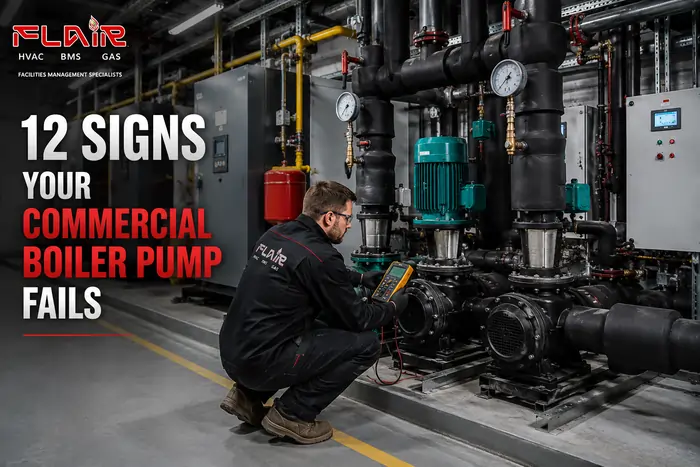
Commercial boiler pumps are critical components within commercial heating systems. Their primary function is to circulate heated water from the boiler throughout radiators, fan coil units, heat exchangers, and other heating equipment within a building.
When a boiler pump starts to fail, heating performance can quickly decline, leading to cold areas, inefficient energy use, increased maintenance costs, and potential boiler breakdowns. For facilities managers, property owners, schools, healthcare facilities, and commercial premises, recognising the warning signs early can prevent costly emergency repairs and business disruption.
At Flair Facilities, our team includes experienced commercial heating engineers and Gas Safe registered professionals who support businesses across Greater London with commercial boiler maintenance, pump repairs, plant room services, and emergency heating solutions.
Why Commercial Boiler Pumps Are So Important
A commercial boiler pump ensures heated water moves efficiently throughout your heating system. Without proper circulation, even the most efficient commercial boiler cannot deliver consistent heating performance.
A healthy boiler pump helps:
- Maintain consistent building temperatures
- Improve energy efficiency
- Reduce strain on the boiler
- Lower operating costs
- Prevent heating system failures
- Extend equipment lifespan
When a pump starts to fail, the entire heating system can be affected.
1. Unusual Noises Coming from the Pump
Grinding, rattling, humming, squealing, or banging noises are often the first signs of a developing pump fault.
Common causes include:
- Worn bearings
- Loose impellers
- Air trapped within the system
- Cavitation
- Shaft misalignment
Any unusual noise should be investigated before it leads to more serious mechanical damage.
2. Excessive Vibration
Commercial boiler pumps naturally produce some vibration during operation. However, excessive vibration usually indicates a problem.
Potential causes include:
- Damaged bearings
- Impeller imbalance
- Misaligned shafts
- Loose mounting brackets
- Pipework stress
Ignoring vibration can accelerate wear on surrounding equipment and significantly shorten pump life.
3. Reduced Heating Performance
If occupants complain about cold rooms or uneven heating, the boiler pump may not be circulating water effectively.
Warning signs include:
- Cold spots throughout the building
- Slow heating response
- Inconsistent temperatures
- Reduced comfort levels
Poor circulation is often one of the earliest indicators of pump deterioration.
4. Visible Water Leaks
Water leaks around a boiler pump should never be ignored.
Leaks often result from:
- Mechanical seal failure
- Corroded fittings
- Damaged gaskets
- Cracked pump housings
- Loose pipe connections
Even minor leaks can cause pressure loss and contribute to larger system failures.
5. Rising Energy Bills
A failing pump typically works harder to achieve the same heating output.
This can result in:
- Increased electricity consumption
- Reduced efficiency
- Longer operating cycles
- Higher energy bills
Monitoring utility costs can help identify performance issues before breakdowns occur.
6. Frequent Pump Cycling
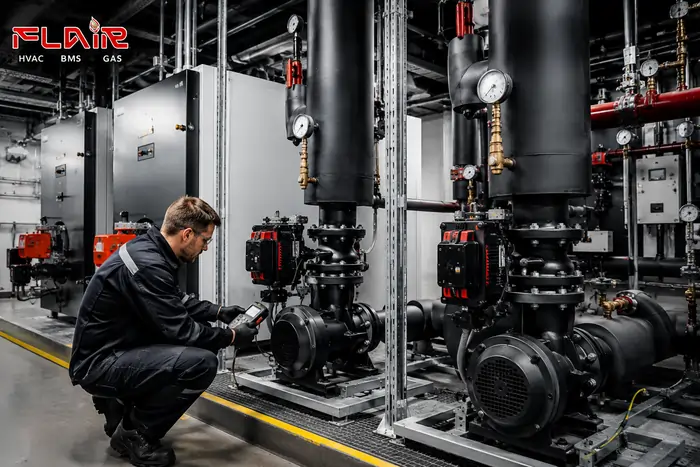
A commercial boiler pump should operate within predictable cycles.
Frequent starting and stopping may indicate:
- Pressure control faults
- Faulty sensors
- Variable speed drive issues
- Airlocks
- Control system failures
Excessive cycling places unnecessary strain on the motor and controls.
7. Overheating Motor
An overheating motor is often a warning sign of an impending failure.
Common causes include:
- Electrical faults
- Excessive load
- Bearing failure
- Poor ventilation
- Voltage fluctuations
Persistent overheating can eventually lead to complete motor burnout.
8. Cavitation Damage
Cavitation occurs when air bubbles form and collapse inside the pump.
Symptoms include:
- Popping noises
- Excessive vibration
- Reduced flow rates
- Internal erosion
If left untreated, cavitation can cause significant damage to pump components.
9. Corrosion and Rust
Corrosion is one of the most common causes of boiler pump deterioration.
Look for:
- Rust deposits
- Corroded fittings
- Surface pitting
- Deteriorating seals
Routine inspections help identify corrosion before it compromises performance.
10. Low System Pressure
Commercial heating systems rely on stable pressure levels.
A failing boiler pump may contribute to:
- Pressure fluctuations
- Reduced circulation
- Poor heating performance
- System faults
Pressure-related issues should always be investigated promptly.
11. Frequent Repair Call-Outs
If the same boiler pump requires repeated repairs, it may be reaching the end of its service life.
Recurring faults often indicate:
- Internal wear
- Ageing components
- Historical maintenance issues
- System design problems
A professional assessment can determine whether repair or replacement is the most cost-effective option.
12. Building Management System (BMS) Alerts
Many modern commercial buildings rely on Building Management Systems (BMS) to monitor heating performance.
Common alerts include:
- Flow faults
- Pressure alarms
- Motor overload warnings
- Temperature faults
- Communication errors
Recurring BMS warnings should never be ignored.
The Cost of Ignoring Boiler Pump Problems
| Issue Ignored | Potential Consequence |
|---|---|
| Minor leak | Water damage |
| Bearing wear | Complete pump failure |
| Cavitation | Impeller replacement |
| Overheating motor | Motor burnout |
| Pressure loss | Heating system disruption |
| Corrosion | Major equipment replacement |
| Vibration | Damage to surrounding equipment |
Addressing faults early is almost always less expensive than dealing with emergency repairs and unplanned downtime.
Benefits of Planned Boiler Pump Maintenance
Regular Planned Preventative Maintenance (PPM) can help identify developing faults before they become major failures.
| Benefit | Business Impact |
|---|---|
| Reduced breakdowns | Less downtime |
| Improved efficiency | Lower energy costs |
| Longer equipment lifespan | Reduced replacement costs |
| Early fault detection | Lower repair costs |
| Better heating performance | Improved occupant comfort |
| Compliance support | Reduced operational risk |
When Should You Call a Commercial Boiler Pump Engineer?
You should arrange a professional inspection if you notice:
- Unusual noises
- Excessive vibration
- Water leaks
- Reduced heating performance
- Low system pressure
- Rising energy bills
- Frequent breakdowns
- Overheating equipment
- Recurring BMS alarms
For safety, compliance, and system reliability, commercial heating systems should always be inspected by qualified engineers with experience in commercial boilers, pumps, plant rooms, and associated mechanical services.
Flair Facilities’ team includes experienced commercial heating engineers and Gas Safe registered professionals serving businesses throughout Greater London.
Commercial Boiler Pump Services Across London
Flair Facilities provides professional commercial boiler pump services throughout Greater London.
Our services include:
- Boiler pump replacement
- Heating circulation pump maintenance
- Emergency pump repairs
- Plant room maintenance
- Pump fault diagnosis
- Commercial heating system support
You may also be interested in:
- Commercial Boiler Services
- Plant Room Maintenance
- Building Management Systems (BMS)
- Commercial Heating Services
- Emergency Boiler Repairs
Frequently Asked Question
What does a commercial boiler pump do?
A commercial boiler pump circulates heated water from a boiler throughout a building’s heating system to ensure consistent temperatures and efficient performance.
How long does a commercial boiler pump last?
Most commercial boiler pumps last between 10 and 20 years depending on operating conditions, maintenance schedules, and system design.
Can a faulty boiler pump increase energy bills?
Yes. A failing pump often consumes more electricity while reducing overall heating efficiency, causing operating costs to rise.
What causes commercial boiler pump failure?
Common causes include bearing wear, corrosion, cavitation, overheating, electrical faults, seal failure, and inadequate maintenance.
Should I repair or replace my boiler pump?
The best option depends on the age, condition, repair history, and efficiency of the pump. A professional assessment can help determine the most cost-effective solution.
Need Commercial Boiler Pump Repairs in London?
If you’ve noticed any of the warning signs above, don’t wait for a complete heating system failure.
Our experienced engineers provide professional inspections, repairs, maintenance, and emergency support for commercial heating systems across Greater London.
Call: +44 20 7998 9005
Email: [email protected]
Website: https://flairfacilities.co.uk/
About the Author:
Flair Facilities Ltd Team
The Flair Facilities Ltd Team consists of experienced commercial heating engineers, Gas Safe professionals, HVAC specialists, facilities management professionals, and technical consultants dedicated to helping businesses maintain safe, efficient, and compliant building services throughout Greater London.
Our expertise includes:
- Commercial Boiler Repairs & Maintenance
- HVAC Systems
- Building Management Systems (BMS)
- Commercial Pump Services
- Plant Room Maintenance
- Pipework & Pipe Insulation
- Gas Safety Compliance
- Emergency Heating Repairs
- Facilities Management
Flair Facilities Ltd is led by William Faris, Director, who oversees operations, project delivery, and service quality across all commercial and domestic contracts.
Connect With Flair Facilities Ltd